 The Market Monitor Minding the Nation's Business
By DIEGO C. CAGAHASTIAN
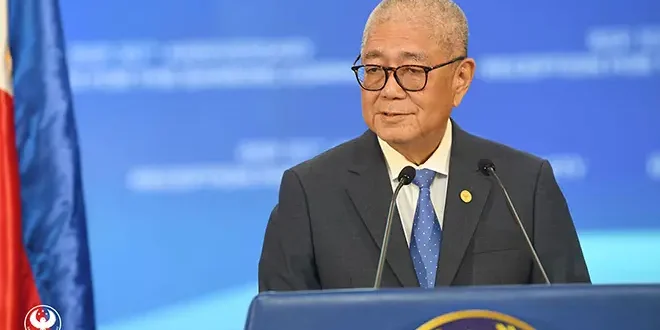
Governor Eli Remolona Jr. of the Bangko Sentral ng Pilipinas (BSP) tried his hand at financial diplomacy in the international stage, with his plan to make regional financial health a focus for the Association of Southeast Asian Nations (Asean) next year.
Remolona said the Bangko Sentral wanted to play an active role in setting Southeast Asia’s economic agenda because the Philippines will assume the chairmanship of Asean in 2026.
The BSP chief underscored this priority during a roundtable meeting at the Bank for International Settlements (BIS) headquarters in Basel, Switzerland on Nov. 11, 2025.
The discussion brought together global financial leaders, including Queen Máxima of the Netherlands, the UN Secretary-General’s Special Advocate for Financial Health; BIS General Manager Pablo Hernández de Cos; and IOSCO Chairman Jean-Paul Servais.
The event was hosted by BIS’ Financial Stability Institute and the UNSGSA.
Advice from the laggard
The Financial Stability Institute aims to ensure that individuals and families across the world can manage obligations, withstand financial shocks, pursue goals, and feel empowered about their financial future.
To attain this objective, they solicit the advice from experts such as Remolona.
The BSP governor’s advice is for Asean to strengthen financial health by expanding access to essential financial markets—stocks, bonds, insurance, and other tools that help individuals build resilience and long-term security.
While this is basic, we wonder if the finance ministers of Singapore, Thailand, and Vietnam, countries whose economies are far more stable and advanced than the Philippines, would heed the motherhood statements from Remolona.
We suspect that Remolona’s invitation to speak at the panel discussion in the Bank of International Settlements was just an accommodation for his being a former employee of the BIS.
Gloomy realities
The local economy which has serious problems of its own such as the flood control and public works corruption scandal and the government’s inability to get a clear handle on its investigation, is looking forward to a lackluster year ahead.
The regional Asian economy, along with the United States’ economy, are bound to suffer from the meltdown of the Japanese government’s bond market.
Both the US and Japan, the biggest and third biggest economies in the world, are being punished by their years of economic mismanagement as evidenced by huge national debts that are projected to crash their economies next year.
Added to these problems are the geopolitical issues confronting Taiwan and Venezuela, where the world’s biggest powers are gearing up for a military confrontation.
Even foreign bankers such as Vaninder Singh and Joey Chung of Deutsche Bank are convinced that trust and confidence issues will be a drag on growth, with the “BSP likely to cut twice more, with risks of an even deeper easing cycle.”
The Monetary Board (MB) will meet on Dec. 11 for a final meeting this year, and a policy rate decision is awaited by stock market investors and other businessmen.
The BSP has lowered borrowing rates by 175 basis points (bps) since August 2024, including a fourth straight 25-bp cut in October that brought the benchmark rate to a three-year low of 4.75%.
Expecting that full-year growth will fall below target, the central bank chief has signaled that a fifth cut is possible before the year ends.
It will take hard work and more time for the Philippines to recover from various economic hurdles, and this serious work precludes having a tete-a-tete and photo op with Queen Máxima and some BIS bigwigs.