 The Market Monitor Minding the Nation's Business


By Rose Marie de la Cruz
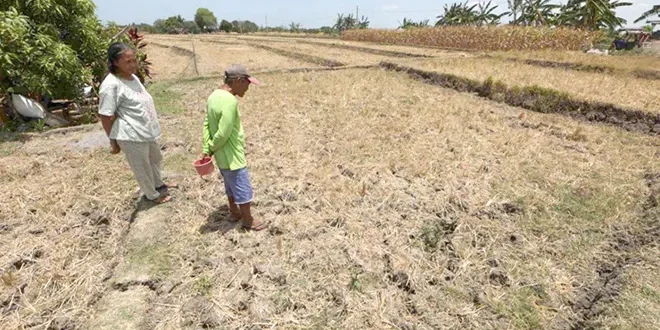
WITH EL Nino now in our midst, it is but proper to ask how, individually and as a nation, have we prepared to cope with this dreadful climatic phenomenon– that worldwide has already manifested in severe heat, forest fires and other nature-borne catastrophes.
As early as May the weather bureau has been warning us of the strong to very strong El Nino that would last from October 2026 to the first half of 2027 and for which we must act cohesively against straining our food and water resources.
The President has reactivated Task Force El Nino to coordinate cross agency responses such as pushing for drought-resistant crops like camote, cassava and bananas for our daily sustenance.
On the part of the Department of Agriculture, the Department of Budget and Management to release P45 billion for fuel and fertilizer subsidies along with solar irrigation projects, the DENR to mobilize regional offices to build extra water sources, promote conservation and prevent forest fires, among other measures.
While the government has earmarked substantial funding and early mitigation guidelines (such as water recycling and shifting outdoor work hours), a “very strong” El Niño still poses severe threats of crop loss, reservoir depletion, and power/water shortages.
Authorities have been asking citizens to personally prepare by harvesting rainwater, storing safe drinking water, and monitoring local government advisories, showing that ultimate readiness depends heavily on localized conservation
The DA on Monday asked the DBM to release the full P45 billion it requested to support El Niño mitigation measures and finance fuel subsidies for farmers and fisherfolk.
DA Secretary Francisco P. Tiu Laurel, Jr. complained that so far only P6.2 billion has been released covering the first tranche of interventions.
The DA has asked that the second batch be released soon, as El Niño is expected to peak between November and April.
The request covers tractors and additional fertilizer, with the DA focusing on areas hit hardest by the dry spell.
In areas with little water, the DA will promote drought-resistant crops such as monggo and other vegetables. Fishing, livestock, and poultry are all at risk.
For areas where nothing can be planted, the DA will work with the Department of Labor and Employment to use the TUPAD program to hire workers for land preparation.
Since drought is not forever, land can be readied for cultivation once the rains return, he noted.
The Department of Social Welfare and Development will also be tapped to augment the daily needs of affected farmers. The DA is also talking with local government units to access their calamity funds.
The P6.2-billion initial tranche is expected to reach nearly 311,000 farmers and fisherfolk, with the largest number of payouts scheduled for November.
Fuel assistance for fisherfolk will start being distributed this week, while payouts to farmers are targeted for before the end of the quarter.
Some areas of Metro Manila are now experiencing reduced water pressures and some are going through rationing because the taps have begun to go dry.
As early as August, shops and yards that stored drums and water containers (big and medium sizes) have been experiencing brisk sales because people are now beginning to impound water for the dry days to come.
As for me, I have never thrown those 1 to 1.5 liter softdrinks bottles because I have been storing water not just for my household but to provide the garbage collectors cold water during the hot days. (I have been doing this practice for years).
Instead of panic buying for bottled water, why not just keep those liter bottles of carbonated drinks and store them in a dry place so that when rationing happens your family has something to use for bathing, drinking, cooking.
And use recycled water for flushing the toilet, gardening and cleaning the garage and mopping floors.
Small conservation measures, done individually and taken collectively, can save our country.