 The Market Monitor Minding the Nation's Business
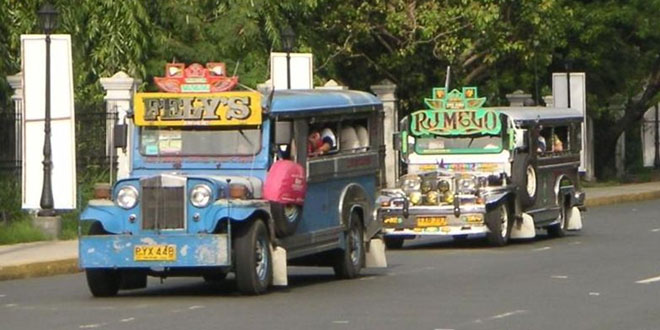
 This discussion is less about the government’s proposed jeepney modernization program or even about jeepneys than it is about another brazen lie foisted on the public. The danger about such constant afflictions where authorities are often caught in obvious falsehoods is in its numbing and cauterizing effect. The Greek story-teller Aesop would have entitled it “The Boy who cried Wolf” Syndrome. Greece is the birthplace of modern democracy and from it’s ancient cultures many of our current government bureaucratic systems. Aeseopica, or the collection of stories with lessons was the register that contained Aesop’s ancient fables notable among which was the popular tale of lies too often told.
The jeepney strike that this particular sector of the transport system attempted last month was the result of a brazen lie that government had foisted absent the typical convoluted spins that normally accompany falsehoods in bureaucratic prose. In this instance even a jeepney driver who can barely recite the alphabet was able to read between the lines of the proposed ban. So obvious was the lie that it almost seems deliberate, its intention, in no uncertain terms, clearly to declare the end of days for the iconic jeepney.
Hidden in the economic intricacies of the desired capitalization requisites for jeepney operators it was clear what the government wanted. Especially when we view the jeepney sector against a truly modern transport system that should be intelligent, equitable, fair, safe and clean -objectives not necessarily addressed by dimply upgrading decrepit units through higher capitalization requirements.
In any case, someone is clearly lying. Again. It wouldn’t be the first time where government officials are concerned. For politicians lying is second nature, its toxic snake-like DNA ribbons weaving, slithering and spiraling in their genes and transferred from generation to generation. In the extremely incendiary issue surrounding the so-labelled proposed modernization of jeepney units that remains central to our often anarchic transport industry there might indeed be a good deal of justification to lie in front of a constituency that also deserves very little of the public’s trust. Justified or not a lie is a lie and there are no two things to it. Nothing, absolutely nothing adequately justifies falsehoods, especially when these come from people vested with the public trust on one hand or those who enjoy a public franchise on the other. The public trust is one of the highest charges one can enjoy and it is enjoyed only when deserved.
A lie is all the more obvious when these are conjured by government not because it becomes doubly brazen but more because the public’s trust in government was never in any degree that can be considered ample or productive. Distrust has been the default. Strangely it remains the default despite popularity or approval ratings that register higher metrics.
Note the following. The president’s approval rating is about 92 percent even where the mandate he won was slightly over a third of the popular votes. That leap of over 60 percent is awesome. The differences between the last registered trust rating of 81 percent and the approval rating is however closer – the variance probably owing in part to the fine distinction between trust and approval that most respondents might not be able to competently discern.
To approve means to concur and this often refers to actions taken by an entity that a rater agrees with and believes as justified. Trust on the other hand does not necessarily have the same defined parameters and may not be as action-based and specific as would be an approval rating. In fact, high or low trust may not have to do with actions taken and may have mire to do more with prospective acts. In other words, when we approve, we approve of an action already openly presented for our OK. When we trust we are saying that we are prospectively surrendering to an act that has yet to be forthcoming.
It is in that last distinction that we analyze the apparent lies that surround the prospective plan of the government to modernize the jeepney transport sector. The distrust is unavoidable even among those who firmly believe that the jeepney problem needs a comprehensive modernization program that covers not simply the technological and mechanical aspects of the jeepney but also behavioral, cultural, economic and political aspects that combine to create the utter mess that this particular sector has sunk to.
In a nutshell what the government proposal actually does is simply to raise the requisites for jeepney operators in an industry characterized mostly as a backyard industry, unregulated, informal and most important of all, cheaply capitalized. By simply focusing on the capital requisite to fund nothing more than a technical and mechanical upgrade, the proposal skirts the real and more important problems that the anarchic jeepney sector inflicts.
The real problems range from the undisciplined, uneducated and infantile mentalities of jeepney drivers, to the primitive boundary system, to the non-existent enforcement of laws and regulations, to the absence of intelligently set-up terminal systems. The list goes on forever and only in its footnotes might we find the necessity to upgrade jeepney units.
If the government truly wanted a modern transport system maybe it should start by telling the truth for a change.