 The Market Monitor Minding the Nation's Business
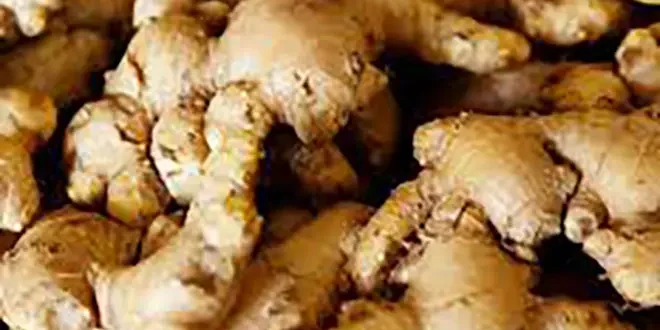
The Department of Agriculture, which has allowed the entry of nearly 4,800 metric tons of ginger, is surprised at the retail price of this vegetable — commonly used as spice or herb — at P100 per kilo. because of strong demand from manufacturers of herbal and turmeric teas.
Data from the Bureau of Plant Industry (BPI) showed that 4,759 MT of imported ginger entered the country as of October 30. The volume represents 31 percent of the 15,225 MT expected ginger imports this year, Business Mirror reported.
DA’s latest commodity prices report showed that ginger retail prices ranged from P250 to P300 per kilo in Metro Manila markets as of November 2.
Last month, the crop was sold from a range of P180 per kilo to P300 per kilo. A year ago, retail prices ranged from P100 per kilo to P200 per kilo, according to government data.
DA Assistant Secretary Arnel de Mesa said ginger should be sold from a range of P80 per kilo to less than P100 per kilo.
Ginger imports had been increasing due to the rising demand of industrial users for the crop which they use in making herbal and turmeric teas. These products are regarded as remedies for coughs and colds, De Mesa said.
He also noted that the country’s ginger-producing regions could not keep up with this demand following the damage inflicted by bad weather on local plantations.
Last month, he said, the BPI approved the sanitary and phytosanitary import clearances (SPSICs) for ginger from Vietnam and Indonesia, which were allocated 50 MT each.
De Mesa noted that this would serve as alternative sources for the Philippines, since most of the country’s ginger imports come from China.
The DA is pushing for the expansion of areas planted with ginger to meet the rising demand for it.
Official data showed that fluctuation in production and harvest areas since 2010, noted DA Undersecretary Cheryl Marie Natividad-Caballero.
Caballero said there had been “significant increases” in areas planted with ginger in 2023, when it jumped to 4,816.26 hectares (ha), from 4,057.30 hectares ha in 2022.
“Our ginger production areas are increasing, and we want to maintain it. We will also source out quality planting materials for distribution and production expansion to encourage local production and make farmers more competitive,” she told the Business Mirror.
. Caballero said ginger yield declined to 6.1 MT per ha in 2023, from 7.1 MT/ha in 2022.
But the expansion in hectarage allowed the Philippines to post a slight increase in output last year. In 2023, estimated ginger production was pegged at nearly 29,380 MT, almost 2 percent higher than the 28,806.83 MT recorded in 2022.