 The Market Monitor Minding the Nation's Business

By Jesse C. Ong
The recent wave of strong earthquakes that rocked different parts of the country has reignited fears of the dreaded “Big One” and brought renewed scrutiny to the durability of public infrastructure built under the Department of Public Works and Highways (DPWH).
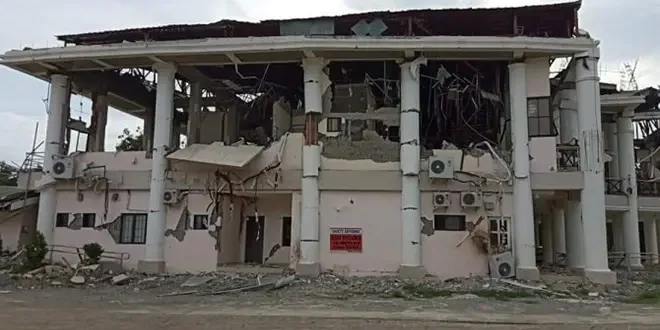
On Friday morning, a magnitude 7.4 earthquake struck Davao Oriental, shaking large portions of Mindanao and prompting brief tsunami warnings in nearby coastal towns. The powerful tremor came just days after a 4.9-magnitude quake hit Baguio City, and more than a week after a devastating 6.9-magnitude quake jolted Cebu, causing deaths and widespread damages.
While experts say the earthquakes are unrelated, their frequency and distribution across major regions have rekindled anxiety about the possible occurrence of a catastrophic event — the so-called “Big One” expected to originate from the Marikina Valley Fault System that cuts through Metro Manila and nearby provinces.
But beyond the natural threat lies a man-made concern: Can the nation’s infrastructure withstand it?
The question has become even more pressing as the DPWH faces intense public backlash over reports of ghost flood-control projects amounting to billions of pesos. The controversy has raised doubts about the transparency and quality of government-funded constructions — from bridges and flyovers to schools, hospitals, and flood barriers — that are supposed to protect lives during disasters.
Critics warn that corruption and substandard construction could turn these public works into death traps in the event of a major earthquake. The ongoing scandal has further eroded public trust in an agency that serves as the country’s main builder of critical infrastructure.
As tremors continue to shake various regions, the calls for a nationwide structural integrity audit have grown louder. Engineers and disaster management experts are urging authorities to reassess the structural integrity of key public buildings, bridges, and other vital facilities, particularly those located near active fault lines.
Local governments in Metro Manila have also begun revisiting evacuation plans, inspecting old public structures, and reinforcing emergency response systems. Meanwhile, schools and offices have renewed earthquake drills as part of heightened preparedness efforts.
For now, the ground may have stopped shaking, but uncertainty continues to rattle the public conscience. The earthquakes have exposed more than geological vulnerabilities — they have laid bare a deep question of trust in the very foundations meant to keep the nation standing.
When the “Big One” finally strikes, it may not only test the country’s resilience but also the integrity of every structure — and every system — built in the people’s name.