 The Market Monitor Minding the Nation's Business

By Rose de la Cruz
FOR OVER a month now, officials of the Department of Agriculture continue to stall on the inclusion of Bio N biofertilizer in the agency’s farm inputs subsidy program despite its potential to reduce production costs and improve farmers’ productivity by restoring soil health.
The National Confederation of Irrigators Association (NCIA) Inc. wrote Agriculture Secretary Francisco Tiu Laurel Jr. on April 6, requesting the inclusion of Bio N in the subsidy program. This was forwarded to Undersecretary for Operations Roger Navarro, who in turn referred it to directors of three subsectors’ programs for comment: Directors Ralph Alan Ceniza for rice, Abel Wagas for corn and Joseph C. Manicad for high value crops. Despite follow up communications, no decision has been made as of late June.

Billions of pesos worth of urea, organic fertilizers such as chicken manure and soil ameliorants, have already been purchased by the DA, yet there has been no major procurement of biofertilizer. While organic fertilizers and other soil ameliorants provide some of the nutrient needs of the plant, Dr Roehlano Briones, of the Philippine Institute for Development Studies (PIDS) noted in his study that all sources of organic fertilizer combined could supply only 0.47% of the Nitrogen imported in 2023. As an example, rice requires at least four 50-kg bags of urea containing 46% nitrogen. Replacing just two bags of urea would require approximately 1,000 kilograms of chicken manure with only t-5% nitrogen. In contrast, the microorganisms in just one kilogram of Bio N can fix nitrogen equivalent to 2 bags of urea.
NCIA members who have already adopted Bio N have reported positive results, encouraging the organization to advocate for its wider distribution through the government’s subsidy program.
The wet season rice planting began in May and will continue until August, but the DA has yet to act on the proposed biofertilizer subsidy. Since the bidding process for farm input subsidies takesthree months, any further delay could make the assistance irrelevant for the current planting season.
Meanwhile, rice and corn farmers remain dependent on imported urea, now priced at ₱3,000 to ₱3,500 per 50-kilogram bag due to global supply disruptions. Despite the availability of affordable, locally produced biofertilizers, the government continues to negotiate for imported urea.
With a severe El Niño expected later this year, wider use of biofertilizers could help farmers by improving soil health and increasing crop resilience through beneficial nitrogen-fixing microorganisms. Yet this opportunity remains largely untapped as subsidies continue to favor chemical fertilizers.
Benefits of Biofertilizers
As cited by the NCIA’s letter to Secretary Laurel, the following are the benefits of Bio N, a product commercially produced by Agri Specialist Inc. in Laguna:
• Bio N is cost-effective. The subsidy amount allocated for urea can procure a larger volume of Bio N, thereby reaching more farmers.
• Higher yield at lower cost. Bio N has consistently shown better yield performance compared with urea, resulting in greater farmer income.
• Environmentally sustainable. Organic in nature, Bio N supports soil health.
• Soil enrichment. Bio N returns organic matter to the soil, unlike urea which depletes it.
• Government ownership. Bio N is a government-owned brand, making it appropriate for government agencies to promote and patronize.
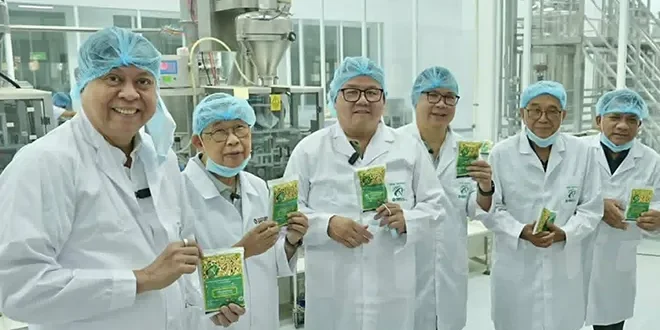
• Support for research and innovation. While Agri Specialist Inc. manufactures Bio N, royalties benefit UPLB-Biotech, funding further research and development for agricultural biotechnologies. The ₱300-million Bio N manufacturing facility in Laguna has the capacity to supply Bio N to the entire country’s rice and corn fields.
The P300-million biofertilizer plant of ASI in Laguna has the capacity to supply Bio N to the entire country’s rice fields.