 The Market Monitor Minding the Nation's Business
EXECUTIVE Order 116, which increased the minimum access volume for pork to 204,210 metric tons for 2026, of which 30,000 MT will be given to food processors while 120,000 MT for the Food Terminal Inc. leading the balance of 54,210 to other importers would create supply chain disruptions and would create “unfair competition.”
Apparently, the government wants to take over the pork import trade,” said MITA president emeritus Jesus Cham. MITA stands for Meat Importers and Trades Association.
Cham made the pronouncement after President Marcos Jr. issued EO 116, increasing the MAV for pork to 204,210 metric tons (MT) for 2026 from the current 54,210 MT.
The EO stipulated that 30,000 MT should be given to processors while 120,000 MT was earmarked for the Food Terminal Inc. (FTI) or the Kadiwa program.
The remaining 54,210 MT is for other importers.
“Apparently, the government wants to take over the pork import trade. FTI or other state trading enterprises do not need MAV since they can import duty-free. This creates unfair competition,” Cham told the Business Mirror.
He added that the government’s move “contradicts” the MAV principle of market consistency, which states that “the mechanism should entail the least government intervention.”
“Obviously, this fosters a situation wherein the private sector cannot compete. Many traders or importers already dismayed will likely drop out of the market.”
Cham said such an intervention could disrupt the supply chain, potentially resulting in shortfalls.
“There will be a domino effect down the supply chain that covers food service and retailers in supermarkets and wet markets,” Cham said. “There will be a disruption to current supply flows. If there are gaps that are not well covered, then shortages may occur.”
Under the law, modifications or adjustments of the MAV are allowed in case of shortages or abnormal price increases.
It stipulates that the President should propose any revisions of the MAV to Congress. The latter should act within 15 days from receipt of the proposal; otherwise, it will be deemed approved.
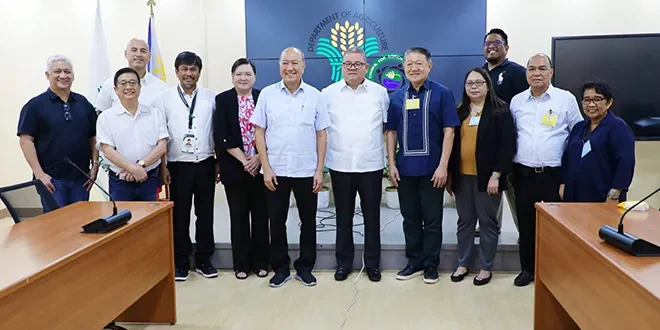
Agriculture Secretary Francisco Tiu Laurel Jr. said that the DA could use the provided allocation for trading partners.
“We don’t have (plans for the allocated volume) as of now. But we might use this as a sort of MAV Plus for our country’s trading partners,” he said.
Cham urged the government to revert the MAV system to the previous guidelines, as the revised rules have reset all licensees’ allocations to zero.
In a letter to Executive Secretary Ralph Recto, Cham said the principal concern of the MAV allocation for pork that triggered the revision in guidelines will be addressed by EO 116.
“We are pleased that the MMC [MAV Management Committee] adopted the recommendation to implement MAV Plus. However, it simultaneously adopted new guidelines that effectively deprived existing licensees of allocations earned and maintained over the past thirty years,” Cham wrote in the letter.
“Now that EO No. 116 has already addressed the additional pork MAV requirements of meat processors and FTI, we respectfully request that the new guidelines be rescinded and the MAV system revert to the previous guidelines.”
The government recently revised the rules for implementing the MAV mechanism, citing the need for transparency and “equitable stakeholder participation in the agricultural sector.”
The new rules cancelled every MAV allocation and all previously issued MAV licenses.