 The Market Monitor Minding the Nation's Business
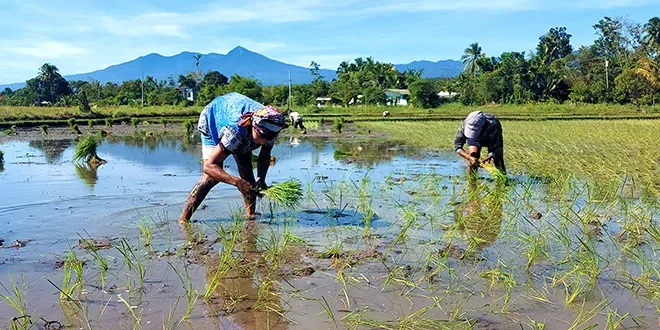
The Department of Agriculture (DA) is ramping up support for farmers in selected regions as it prepares for the expected impact of a looming super El Niño, with intensified assistance aimed at minimizing potential losses in the country’s rice production.
Agriculture Secretary Francisco Tiu Laurel Jr. said the agency will concentrate its interventions in rice-growing areas with more reliable water supply to help offset expected production declines in drought-hit regions.
Speaking on the sidelines of the Economic Journalists Association of the Philippines’ food security forum, Tiu Laurel said the DA will provide additional seeds and fertilizer to farms in Southern Luzon, the Visayas, and Mindanao, where irrigation and water availability remain relatively favorable despite the developing El Niño.
“We will double down on our interventions in areas with more water than usual,” he said, adding that increasing productivity in these areas could help compensate for reduced harvests elsewhere.
The DA plans to provide more certified seeds per hectare and expand fertilizer assistance to maximize yields in less drought-prone provinces.
Meanwhile, the agency will continue extending support to farmers in areas expected to experience severe agricultural drought, including the Ilocos Region, Cagayan Valley, Central Luzon, and Western Mindoro, where declining soil moisture could significantly affect rice production.
Tiu Laurel said the government will work closely with local government units to provide assistance to affected farmers through various support programs.
The DA estimates that the country could lose around 700,000 metric tons of palay production due to the combined effects of a strong El Niño, adverse weather disturbances, and elevated global fuel and fertilizer prices.
The projected losses are higher than the historical annual average decline of 500,000 to 600,000 metric tons, highlighting the growing risks posed by extreme weather to the country’s food security.
The intensified intervention forms part of the government’s broader strategy to stabilize rice production, protect farmers’ livelihoods, and help cushion the impact of El Niño on food supply and inflation.