 The Market Monitor Minding the Nation's Business
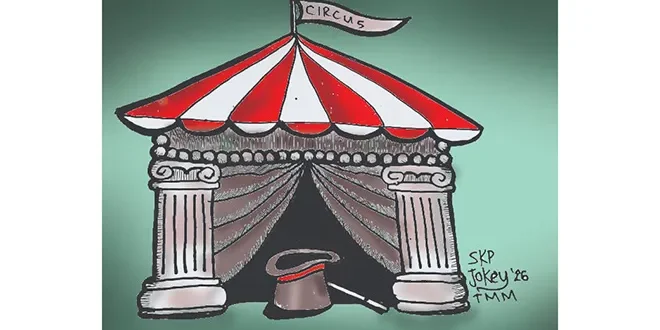
The impeachment side circus is unlikely to end with the Supreme Court’s dismissal of three petitions challenging the Senate impeachment court’s interpretation of the two-thirds vote required to convict Vice President Sara Duterte.
The High Court did not settle the constitutional controversy on its merits. It dismissed the petitions on procedural grounds, including lack of standing and prematurity. In plain language, the petitioners were not considered to have the proper legal personality—or sufficiently ripe cause—to bring the dispute before the country’s highest court.
That distinction matters. Earlier, former chief justices and associate justices had advised the senator-judges that the voting threshold was an issue the impeachment court itself should resolve. The Senate therefore remains the immediate arena for the dispute.
Curiously, the defense panel has been unusually restrained about revealing its next move. That silence may indicate a recalculation of strategy, particularly after the Vice President accused Malacañang of contemplating the cancellation of the 2028 presidential elections.
That allegation is explosive and demands evidence, not political theater. If the election is genuinely threatened, the public deserves facts. If it is merely another weapon in a political war, it should be exposed as such.
The larger question, however, is what exactly motivates Sara Duterte’s determination to become president.
Her political conduct has often appeared driven less by a demonstrated program for improving the lives of ordinary Filipinos than by the bitter political feud between the Duterte and Marcos families. The impeachment battle increasingly resembles an extension of that feud.
There is also a disturbing contradiction in the Duterte phenomenon. Evidence presented in the impeachment proceedings has raised serious questions about the Vice President’s use of public funds and the accumulation of wealth within the political family. Yet substantial public support remains.
That support reveals something deeper than loyalty to one politician. It exposes the Philippines’ continuing addiction to political dynasties and personality-driven politics.
Filipinos repeatedly embrace leaders whose actions contradict the values they proclaim. They condemn corruption but defend their favorite politicians. They demand accountability from political enemies while excusing misconduct by political allies.
The impeachment trial, therefore, is about more than Sara Duterte. It is a test of whether institutions can rise above dynasties, vengeance and electoral calculations—or whether the country will once again allow powerful families to turn public office into a private battlefield.
The circus continues because the politics behind it is far from finished.