 The Market Monitor Minding the Nation's Business
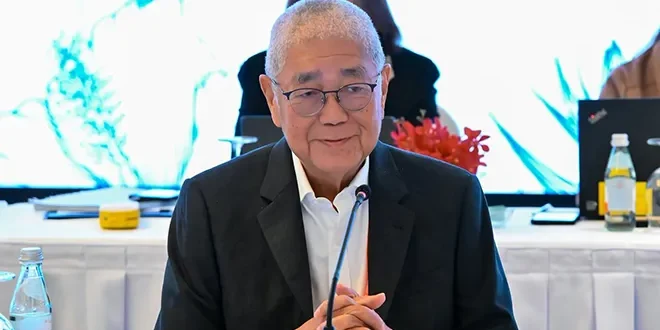
Bangko Sentral ng Pilipinas (BSP) Governor Eli Remolona Jr. defended the central bank’s gold sales before the Senate last week, saying the transactions were part of routine reserve management rather than attempts to profit from rising market prices.
Senator Imee Marcos sought a detailed accounting of the country’s gold sales, questioning why the BSP disposed of part of its holdings as international prices continued to climb.
Remolona explained that gold is managed as part of the country’s overall foreign reserve portfolio. Unlike interest-bearing assets, he said, gold does not generate income and also entails custody costs.
He disclosed that the Philippines sold 6.25 metric tons of gold from January to September 2024 at an average price of $2,331 per troy ounce.
Marcos questioned the timing of the transactions, noting that international gold prices subsequently rose to around $4,006 per troy ounce in 2025.
The BSP chief maintained, however, that the central bank does not attempt to predict market peaks when deciding whether to buy or sell gold.
“May panahon po na lugi tayo, may panahon na kumikita tayo nang malaki. Sa 2026, malaki ang kinita natin. Pero hindi ‘yun ang strategy namin eh. Ang strategy namin, hindi kami tumataya. We don’t speculate on the price of gold,” he said.
Marcos also raised concerns over the country’s declining foreign exchange reserves, which she said had dropped from $113 billion to around $98 billion.
Remolona pointed to stronger exports as one way to address the concern, explaining that foreign currency earnings from overseas sales help replenish dollars used to pay for imports.
The Senate discussion also covered the impact of the BSP’s monetary policy on inflation and economic growth.
Marcos questioned whether successive interest rate increases had effectively eased inflation, particularly as economic growth slowed and prices remained elevated. She also raised concerns that further monetary tightening could discourage consumer spending and business activity.
The senator cited the BSP governor’s readiness to maintain a hawkish policy stance into late 2026 and 2027 to prevent second-round inflationary effects, including higher transport costs and wage adjustments.
However, she warned that sustained high interest rates could further weaken economic activity.
Remolona said the central bank must balance its responsibility to bring inflation down with its mandate to support economic growth.
“We have to lower inflation and at the same time promote growth,” he said.
He acknowledged that monetary policy works with a considerable time lag, explaining that interest rate adjustments may take about a year before their full effects are reflected in inflation.
“Eh gano’n po talaga. Napakahaba po ng lag ng effect ng monetary policy. Bago magka-effect sa inflation, mga isang taon, unfortunately. And that’s the best we can do,” he said.
Marcos, meanwhile, cautioned that prolonged high borrowing costs could discourage household purchases and put additional pressure on businesses already dealing with sluggish sales.