 The Market Monitor Minding the Nation's Business
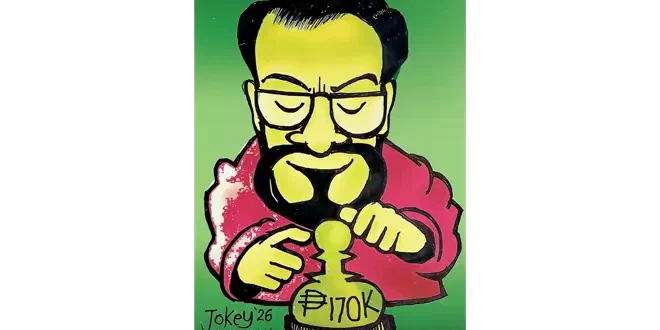
Filipinos do not need to be told to pay an additional ₱170,000 each to help settle the country’s national debt. They are already paying for government obligations through taxes, inflation and, too often, deteriorating public services.
The figure may sound dramatic when presented as an individual debt burden, but government debt is not a personal bill handed to every citizen. It is a sovereign obligation serviced through tax revenues, government earnings and refinancing. Turning the national debt into a supposed ₱170,000 bill for every Filipino oversimplifies a complicated fiscal problem and risks misleading the public.
That is why Senator Alan Peter Cayetano’s proposal deserves scrutiny—not simply because it is politically provocative, but because it distracts from the more important question:
Why has government accumulated such enormous debt, and how effectively is borrowed money being used?
Senator Panfilo Lacson was equally right to object to Cayetano’s sweeping characterization of public servants as thieves. Corruption exists in government, but honest employees should not be condemned along with those who steal public money.
Thousands of civil servants work for modest salaries while performing essential services under difficult conditions. To label an entire bureaucracy as dishonest is both unfair and destructive. It undermines the very public servants whose integrity government desperately needs.
Cayetano’s remarks may have generated attention, but attention is not leadership.
A senator who aspired to be Senate President—or seeks any higher national position—should offer serious solutions to serious problems. Public debt requires fiscal discipline, expenditure controls, stronger revenue collection, economic growth and accountability for every peso borrowed.
It does not require theatrical proposals that turn a national balance sheet into a personal collection notice for 115 million Filipinos.
Nor should public officials exploit legitimate anger over corruption to insult an entire workforce.
The Philippines needs politicians capable of distinguishing between government debt and household debt, between corruption and public service, and between political theater and policy.
Cayetano has every right to challenge government spending and demand accountability. But if his argument is that every Filipino must personally shoulder the national debt, he should first explain how such a scheme would work—and why ordinary taxpayers, who already finance government, should pay twice.
The national debt is a government responsibility, not a ₱170,000 invoice slipped under every Filipino’s door.
Public service is not a synonym for theft. The country needs stronger accountability, not broader insults.