 The Market Monitor Minding the Nation's Business
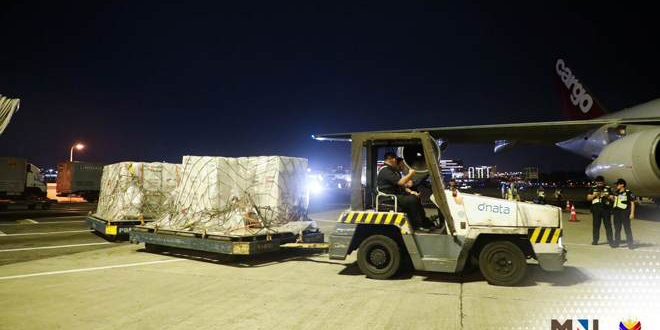
HONG KONG — Air cargo demand, recently propped up by AI data-center projects, has demonstrated no sign of slowing, according to the CEO of the world’s largest air cargo handler, amidst uncertainty in the stock markets over the sustainability of AI spending.
Kerry Mok, who runs Singapore-based SATS, said capital equipment such as server racks and semiconductors has been the main driver of air cargo growth over the past year.
Some data-center builds are multiyear projects, “which means there is a constant demand for that… It’s good for us,” he said.
The air cargo market is in the middle of its annual peak season and SATS is not experiencing any reduction in AI-related demand, Mok said. “The numbers are pretty robust.”
The firm’s cargo clients include Singapore Airlines, Turkish Airlines and Atlas Air.
Mok said the Americas region was now SATS’ fastest-growing market after a difficult prior year when tariffs and the removal of the “de minimis” exemption to duties on low-value packages weighed on US flows.
“This year, our Americas are growing double digit, and it’s coming back very nicely,” he said.
He added SATS was handling “a lot of data-center products being shipped into the US” and has seen a surge in charter flights in and out of the country.
SATS reported a nine-percent rise in revenue to SG$1.71 billion ($1.33 billion) for the quarter ended Sept. 30, on the back of higher cargo and meal volumes.
Its cargo volume growth outpaced International Air Transport Association benchmarks for the 12th straight quarter, rising eight percent in the July–September period versus 5.3% global growth in IATA data.
Mok said the Middle East conflict led to a surge in cargo handling in Singapore, where volumes grew more than eight percent in its first half ended Sept. 30. That growth rate was “unheard of” for a city-state whose cargo growth normally tracks GDP, he said.
Charter flights have become “far more important” as Middle East carriers canceled passenger flights, cutting belly-hold space for cargo, he added.
Mok said roughly 20% of the cargo SATS handles globally, mostly capital equipment, requires specialized treatment such as no vibration, tilting or double stacking. In Singapore, the share of technology cargo is even higher, he said.
The US said it would restrict shipments of advanced chips to Southeast Asian countries such as Malaysia, Singapore and Thailand, which Chinese companies have used to access computing power to train AI models.
Mok played down the risk to air cargo volumes, saying demand exceeds supply.
“If it’s a shortage of chip in one country, if suddenly I’m stopping the flow to that country, there’ll be new demand elsewhere,” he said.