 The Market Monitor Minding the Nation's Business

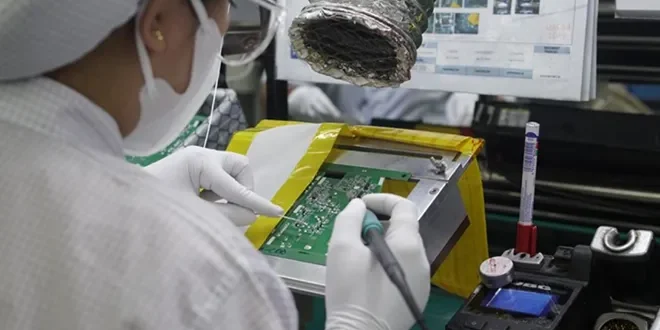
The Philippines is targeting a major expansion of its semiconductor and electronics industry, seeking to more than double annual exports to US$110 billion by 2030 while moving into higher-value activities such as chip design, engineering, research and innovation.
The Philippine Semiconductor and Electronics Industry Roadmap aims to increase the country’s share of global semiconductor assembly, test and packaging from 4 percent to 7 percent, while capturing 4 percent of the global electronics manufacturing services market.
Executive Secretary Ralph Recto said the government wants the Philippines to move beyond its traditional role in assembly and manufacturing and develop capabilities that generate greater value and better-paying jobs for Filipino workers.
“Ang target natin, hindi lang makita ang Made in the Philippines sa mga produkto (Our target is not just to showcase Made in the Philippines products),” Recto said, according to a news release on Thursday.
“Gusto natin (What we want): Designed in the Philippines. Engineered in the Philippines. Innovated in the Philippines.”
The roadmap also seeks to establish an integrated circuit (IC) design industry capable of generating US$2 billion to US$3 billion in annual exports, positioning the Philippines for a larger role in the global technology supply chain.
Recto said the industry’s expansion could create more opportunities for Filipinos beyond factory work, particularly in engineering, research, chip design and other highly skilled occupations.
The semiconductor and electronics sector already accounts for more than 60 percent of Philippine merchandise exports, generating over US$45 billion annually and ranking among the country’s most important sources of export earnings.
Recto, who chairs the Semiconductor and Electronics Industry Advisory Council (SEIAC), said the industry would also serve as a major driver of the Luzon Economic Corridor and help strengthen the Philippines’ position in global technology and supply chains.
“Whether we act or not, this industry will continue to expand. And we must grow with it. That is the direction President (Ferdinand) Marcos Jr. has set for us,” he said.
Recto said the government must address obstacles that could discourage semiconductor companies from investing or expanding their Philippine operations.
Among the key challenges are shortages of engineers and skilled workers, inadequate power, water and logistics infrastructure, lengthy permitting procedures and regulatory bottlenecks.
The roadmap outlines measures to strengthen the industry’s talent pool and move the Philippines further up the semiconductor value chain, from advanced packaging and IC design toward increasingly sophisticated activities.
Earlier government plans have also included the establishment of specialized national laboratories to support research, fabrication and workforce development.
Recto stressed that the roadmap must translate into actual investments, jobs and industry expansion rather than remain a government policy document.
“A roadmap is only as good as its execution. We have enough good plans in government. What the industry needs from us now are results,” he said.
“As chairperson of SEIAC, you can be assured that our office will not only chair the launch of this Roadmap, but will stay on top of its actual implementation.”
The government’s strategy reflects a broader push to capture a larger share of the global semiconductor value chain, with higher-value technology activities expected to generate more investment, skilled employment and export revenues for the Philippine economy.