 The Market Monitor Minding the Nation's Business

By Rose Marie de la Cruz
MANY of us, especially those in the path of floodwaters that destroyed homes, crops and caused deaths and missing persons, have been cursing the nearly two months of heavy rainfall that also brought mudslides and landslides.
Many streets in Metro Manila went under and the floods merely exposed even more the substandard roads, bridges and flood control projects that had been funded out of our taxes, but the cash were just pocketed by a few greedy politicians, local leaders and contractors.
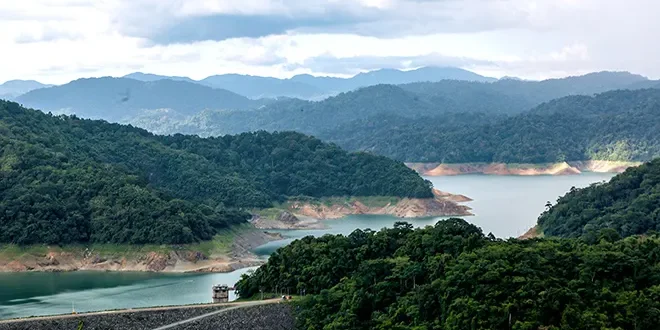
But there is an upside to the habagat– the rains filled our thirsty dams– those in watersheds that have been abused by quite a few influential people causing more misery to the inhabitants adjoining them.
Most dams have reached their critically low levels such that come October, when the super El Nino would dry up the entire country, still we have water for our taps, for our farms and for electric generation.
Shouldn’t we be grateful then?
God just prepared us for an even worse specter next month and mind you, the El Nino is expected to last until February after which the official dry season begins. In short we will have one of the longest dry period in our entire life, as a country and as a people.
Many countries, esp. in Europe, the Americas, Asia and Africa are going through the worst dry spells and heat waves that cause massive forest fires.
These episodes must serve as a vision for us of what to expect beginning next month.
Even the Department of Agriculture agrees that the habagat we had experienced for nearly two months would soften the El Nino effect, when it said in a statement that the repeated rounds of heavy rain could cushion the expected blow of El Niño on the local rice sector.
DA Secretary Franciso Tiu Laurel Jr. said the recent weather disturbances could minimize the projected year-on-year decline in rice output to around 400,000 metric tons (MT), from its previous forecast of 700,000 MT.
“Due to the habagat [southwest monsoon], we’re optimistic that [rice output decline] might be reduced by around half from 700,000 MT to just 400,000 MT in the worst-case scenario,” he told reporters.
Latest DA report showed that the southwest monsoon and typhoons Luis, Maymay, and Neneng have caused over P4 billion worth of damage to the agriculture sector, with losses pegged at over 100,000 MT.
Laurel directed DA agencies to continuously revise their response plans to the El Niño as part of efforts to minimize the drought’s impact on supply and prices.
“The lessons we learned from the powerful El Niño episode that ended in mid-2024 should help us respond better to the climate challenge we now face,” Laurel was quoted by Business Mirror.
During the previous dry spell episode, the DA noted that global rice prices surged as weather concerns collided with India’s export restrictions.
Philippine agriculture output contracted in 2024, with adverse weather conditions causing rice production to fall 4.85 percent year-on-year.
A fresh drought could therefore squeeze domestic supply just as global markets remain vulnerable to weather and trade disruptions.”
The DA is working on both immediate assistance to local producers and preemptive measures to secure food supplies before weather disruptions translate into shortages and higher prices.
The agency noted that strengthening irrigation, adjusting planting schedules, securing inputs, monitoring inventories, and preparing import and market interventions are among the interventions lined up.
The strategy involves shifting production to less affected regions, expanding cloud seeding and solar-powered irrigation, and maximizing water efficiency; distributing drought-tolerant seed varieties, providing crop insurance indemnification, and extending emergency financial support to vulnerable farmers.
“We have to produce more where the impact of El Niño will be less severe, increase the water available to farmers, and use every drop wisely through practices such as alternate wetting and drying and planting crops that require less water, Laurel stated.”