 The Market Monitor Minding the Nation's Business

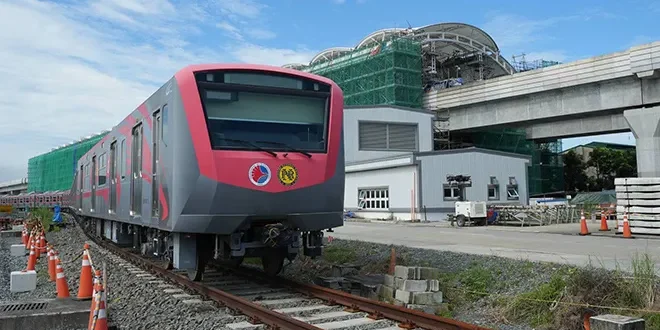
The North-South Commuter Railway (NSCR) is now targeted to be fully operational by 2033 after the Economy and Development Council approved amendments to the project, with partial operations expected to start in December 2027.
The full operations of the NSCR are now targeted to start by the third quarter of 2033, later than the previous January 2032 target, after procurement challenges, tighter government spending and right-of-way issues delayed the flagship railway project.
“Regarding the North-South Commuter Railway Operations and Maintenance PPP (public-private partnership) project, there were some changes to the timeline. This was due to the need for fiscal prudence and careful management of public funds, challenges in the procurement process, and right-of-way issues,” Palace Press Officer Clarissa Castro told reporters.
Under the revised schedule, the railway’s full commercial operations from Clark to Calamba are now expected by the third quarter of 2033.
“The expected timeline for the first partial operation (Valenzuela to Malolos) is December 2027; the second partial operation (Malolos to Clark) is set for the fourth quarter of 2028; and the third partial operation (Clark-Solis-Alabang to Calamba) is scheduled for the fourth quarter of 2031,” Castro said.
The ED Council, chaired by President Ferdinand R. Marcos, Jr., had approved revisions to the parameters, terms and conditions for the NSCR project, in order to attract more bidders and encourage “competitive proposals.”
“Generally, the amendments involve the timelines and slight budget adjustments,” Ms. Castro said, but did not specify the amount.
The 147-kilometer elevated railway line seeks to ease travel across three regions Central Luzon, Metro Manila, and Calabarzon (Cavite, Laguna, Batangas, Rizal, and Quezon).
“The NSCR is an investment in opportunity,” said the Department of Economy, Planning, and Development Secretary and ED Council Vice-Chair Arsenio M. Balisacan.
He added that improved mobility will expand access to jobs, markets, education, and services across regions, reflecting our commitment to a more productive, resilient, and inclusive economy.