 The Market Monitor Minding the Nation's Business

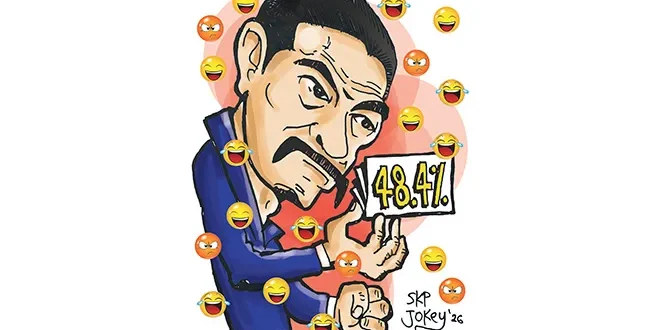
President Ferdinand Marcos Jr.’s disclosure during his State of the Nation Address that warrants may soon be issued against his cousin, former House Speaker Martin Romualdez, over alleged anomalies in flood control projects was widely interpreted as an attempt to demonstrate that the administration’s anti-corruption campaign will spare no one.
Whether that promise ultimately translates into convictions, however, remains to be seen.
The announcement comes amid an already volatile political climate. Two incumbent senators are facing legal proceedings, while another continues to evade an arrest warrant issued by the International Criminal Court.
Meanwhile, opposition lawmakers have persisted in calling for broader investigations into flood control projects, arguing that billions of pesos in public funds deserve thorough scrutiny regardless of political affiliations.
As expected, every investigation is now viewed through a political lens. Supporters of the administration see the inquiries as part of a campaign to weaken President Marcos before the impeachment proceedings against Vice President Sara Duterte reach their conclusion.
Critics, on the other hand, argue that accountability cannot be suspended simply because it carries political consequences. Both sides accuse the other of weaponizing the justice system.
What should concern the public is not merely who gains or loses politically, but whether investigations are conducted fairly, independently, and based on credible evidence rather than media spectacle or partisan maneuvering.
Manipulating witnesses, prejudging cases, or selectively pursuing suspects only erodes confidence in institutions already struggling to earn public trust.
Even if today’s political protagonists were replaced tomorrow, the country’s deeper governance problems would remain. Corruption is not defeated by changing personalities alone. It requires stronger institutions, transparent procurement, effective auditing, swift prosecution, and an electorate that rewards competence and integrity over popularity.
Recent opinion surveys underscore that challenge. Several politicians facing serious legal controversies continue to enjoy high public approval, while celebrity status remains a powerful electoral advantage. The surveys do not determine guilt or innocence, but they do suggest that many voters continue to prioritize familiarity, charisma or political loyalty over proven performance in office.
Democracy ultimately reflects the choices of its citizens. If elections continue to reward name recall rather than accountability, the cycle of disappointment will persist. Lasting reform will come not from the downfall of one political camp or another, but from a justice system that applies the law equally and an electorate willing to demand higher standards from those who seek public office.