 The Market Monitor Minding the Nation's Business

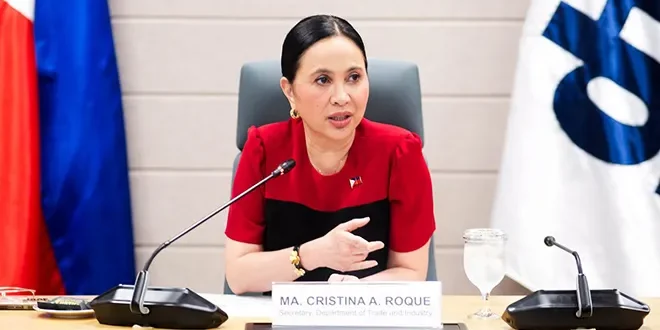
Government intends to transforms the country as a regional hub for the manufacture of electric vehicles (EV) through a program that provides incentives for local EV manufacturers, according to the Department of Trade and Industry (DTI).
Executive Order (EO) No. 121, which establishes the EV Incentive Strategy (EVIS) program, was signed last July 29 by President Ferdinand Marcos Jr., to “strengthen the Philippines’ position as an emerging hub for electric vehicle manufacturing in the region.”
DTI Secretary Ma. Cristina A. Roque said, “EO No. 121 sends a clear signal to global and domestic investors that the Philippines is ready to compete for high-value manufacturing investments in the rapidly growing electric vehicle sector.”
The EVIS provides time-bound and performance-based fiscal support to drive investment in domestic EV production.
The program fulfills the mandate of Republic Act No. 11697—the Electric Vehicle Industry Development Act (EVIDA)—to establish an incentive structure accelerating the local automotive industry’s transition toward electric mobility.
Roque said EVIS will fuel EV market growth and build a robust manufacturing ecosystem, generating quality jobs and expanding the country’s integration into global supply chains.
Under the program, automotive manufacturers can register up to two EV models to receive Fixed Investment Support (FIS) and Production Volume Incentives (PVI). The FIS covers a portion of capital expenditures for EV production, while the PVI offers incentives of up to 12% of an EV’s ex-factory price, capped at ₱200,000 per unit.
“This approach ensures that government support translates into tangible economic benefits, including increased local production, technology transfer, supply chain development, and employment opportunities for Filipino workers,” Roque added.
The EVIS carries a total incentive ceiling of ₱60 billion, with each enrolled EV model eligible for up to ₱15 billion. Support will be disbursed in the form of tax payment certificates, which participating companies can use to settle national taxes and import duties.
The Board of Investments (BOI) will lead program execution, with the DTI working alongside industry stakeholders to draft implementing guidelines and ensure a smooth rollout.
For the Chamber of Automotive Manufacturers of the Philippines Inc. (CAMPI), EVIS offers much-needed support to the local automotive industry, adding it will continue partnering with government to develop complementary programs that “assure long-term viability and continuous investments in the local auto manufacturing landscape.”
BOI Managing Head and Trade Undersecretary Ceferino Rodolfo revealed that targeted workforce training and school-enterprise dual education programs are vital to enhancing the country’s competitiveness in attracting EV investments.
He added that addressing the current shortage of skilled technical professionals remains critical to scaling up the sector and encouraging high-value investments.