 The Market Monitor Minding the Nation's Business

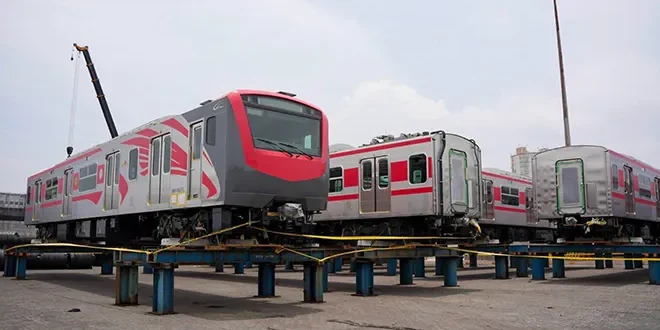
The Marcos administration has allocated P197.30 billion for big-ticket railway infrastructure projects for 2027—more than triple this year’s funding—to ensure on-time completion of the North-South Commuter Railway (NSCR), the country’s first underground railway, and other major rail projects aimed at benefiting millions of Filipinos while providing access to economic opportunities.
Under the proposed national budget for 2027, funding for the Rail Transport Program will surge by P141.96 billion, or 256.54%, from the P55.34 billion provided under the FY 2026 General Appropriations Act (GAA).
Of the P197.30-billion proposed rail budget, P191.28 billion—or nearly 97%—will go to two of the country’s biggest transport projects: P123.84 billion for the NSCR and P67.44 billion for Phase I of the Metro Manila Subway Project (MMSP).
The massive increase puts rail expansion at the center of the administration’s transportation investments, to hopefully drastically reduce time spent commuting in traffic while connecting major economic centers, and creating jobs opportunities through faster and more reliable public transport.
Pres. Ferdinand Marcos Jr. said in his Budget Message – “An efficient transportation system is essential to a productive economy. Faster, safer, and more reliable mobility reduces the cost of doing business, improves the quality of life of commuters, and connects Filipinos to greater opportunities. We will adapt modern transportation systems that make travel more accessible, strengthen regional connectivity, and support sustained economic growth.”
Department of Budget and Management (DBM) Acting Secretary Kim Robert C. De Leon stressed the unprecedented rail investments are intended to translate major infrastructure spending into concrete improvements in the daily lives and economic prospects of Filipinos.
“These investments demonstrate that reducing travel time and logistics costs, connecting regional economies, improving the movement of people and goods, and bringing more Filipinos within reach of jobs and economic opportunities are important priorities of this administration,” Budget Secretary De Leon said during the budget presentation at the Senate.
The biggest share of the proposed rail budget will go to the NSCR System, which is set to receive P123.84 billion—more than four times its P28.79-billion allocation under the FY 2026 GAA.
NSCR is envisioned as a major transport backbone connecting Metro Manila with the fast-growing economic centers of Central Luzon and CALABARZON.
The system includes a 37.75-kilometer railway from Tutuban to Malolos, Bulacan, with extensions covering 52.65 kilometers from Malolos to Clark, Pampanga, and 56.86 kilometers from Solis, Manila to Calamba, Laguna. The NSCR will have 35 stations spanning Metro Manila, Bulacan, Pampanga and Laguna.
The Tutuban-Malolos segment is projected to accommodate more than 300,000 passengers daily during its opening year, while cutting travel between Tutuban and Malolos to approximately 35 minutes.
Government also proposes to allot P67.44 billion for Phase I of the Metro Manila Subway Project—more than triple its P20.39-billion allocation under this year’s budget.
The country’s first underground urban railway will span 33 kilometers with 17 stations, with its main line traversing Valenzuela and Bicutan and a spur line going to Terminal 3 of the Ninoy Aquino International Airport.
The subway will allow commuters to move seamlessly across different railway systems: MRT Line 3, MRT-7 and LRT Line 1 at North Avenue; LRT Line 2 at Anonas; and the upcoming MRT-4 at along the stretch of Ortigas Avenue. It will connect with the NSCR at the Senate, FTI and Bicutan stations.
The proposed FY 2027 budget also provides P1.17 billion for the LRT Line 1 Cavite Extension Project, which covers an 11.7-kilometer extension from the existing LRT Line 1 terminus at Baclaran to Niog Station in Bacoor, Cavite.
Another P1.94 billion is proposed for the MRT Line 3 Rehabilitation Project, nearly four times its P500-million FY 2026 GAA allocation. The project covers the rehabilitation and upgrading of the 16.9-kilometer rail line, including its light rail vehicles, tracks, signaling system, power supply system, overhead catenary system, communications system, depot and station equipment.
The government is also proposing around P603.89 million for the LRT-1 South Extension Project (SEP)–Common Station Interim Operations, which will connect LRT Line 1, MRT Line 3 and MRT-7 at EDSA and North Avenue and eventually provide a connection to the MMSP.
The proposed P197.30-billion allocation is also P73.18 billion, or 58.96%, higher than the P124.12 billion proposed for rail transport under the FY 2026 NEP, underscoring the administration’s push to accelerate major railway investments in 2027.
For DBM, the scale of the investment must ultimately be measured not by the billions allocated, but by the difference these projects make in the lives of commuters—from less time lost on the road to easier access to workplaces, schools, businesses, and economic centers.
As Secretary De Leon highlighted in presenting the proposed budget, “the true measure of a budget is not simply how much is approved or released, but how effectively those resources become real results for our people.”
The proposed allocations form part of the FY 2027 NEP and remain subject to congressional deliberations and approval.