 The Market Monitor Minding the Nation's Business

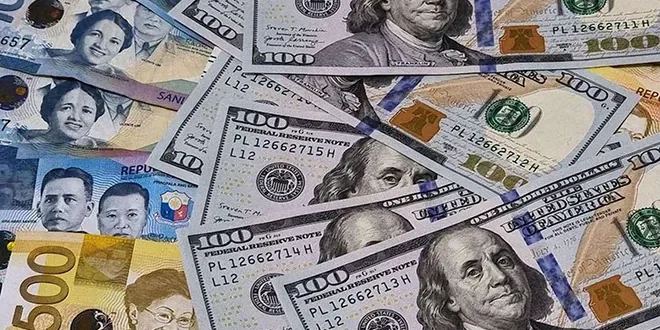
Malacañang said the government will exercise greater discipline in spending public funds and prioritize projects with strong economic and social returns as the peso continues to weaken against the US dollar.
The peso closed at ₱62.565 against the dollar on Wednesday, its fourth consecutive record-low close, raising concerns over the impact of a weaker currency on imported goods, particularly fuel and other dollar-priced commodities.
Palace Press Officer Claire Castro said fiscal discipline forms part of the administration’s response to mounting economic pressures.
Reading a statement from the Office of the Executive Secretary (OES), Castro said the peso’s latest weakness was driven by broad strength in the US dollar and rising global oil prices.
The OES said the Bangko Sentral ng Pilipinas’ (BSP) recent rate hike, while intended to keep inflation expectations anchored, could also provide support to the peso.
“Moving forward, we expect the BSP to act decisively based on available data and intervene when necessary to reduce exchange rate volatility,” the OES said.
Castro said the government’s spending strategy would focus on ensuring that public funds generate meaningful economic benefits.
“Isa po sa nakikita ng administrasyon na maaaring solusyon ay kailangan na gumastos ang gobyerno sa mga tamang proyekto. Hindi dapat masayang ang ating pondo sa kung anu-anumang pagkakagastusan (One of the solutions seen by the administration is for the government to spend on the right projects. Our funds should not be wasted on unnecessary expenditures),” she said.
“So, dapat magkaroon ng disiplina kung paano gagastusin ang pondo para maka-improve po ng ekonomiya ng bansa (There should be discipline in how funds are spent to help improve the country’s economy),” she added.
Asked whether Malacañang would order government agencies to reduce non-essential expenditures, Castro said the issue would first be discussed by the administration’s economic team.
She said government savings could instead be redirected toward more urgent and economically important requirements.
The Palace also cited the continuing conflict in the Middle East as another source of economic pressure, particularly as the Philippines relies on the region for part of its crude oil supply.
To cushion households from higher fuel and commodity prices, Castro said the government continues to implement measures under the Unified Package for Livelihoods, Industry, Food and Transport (UPLIFT).
The assistance includes ₱20-per-kilogram rice for qualified beneficiaries, zero-balance billing in Department of Health hospitals and select local government hospitals, and toll-free access for buses and vehicles transporting agricultural products.
The expanded UPLIFT program was launched to assist low-income households affected by rising fuel and commodity prices amid the Middle East crisis.
The Palace said these measures, together with tighter fiscal discipline and more targeted public spending, are intended to limit the impact of external economic shocks on Filipino families while supporting broader economic stability.