 The Market Monitor Minding the Nation's Business

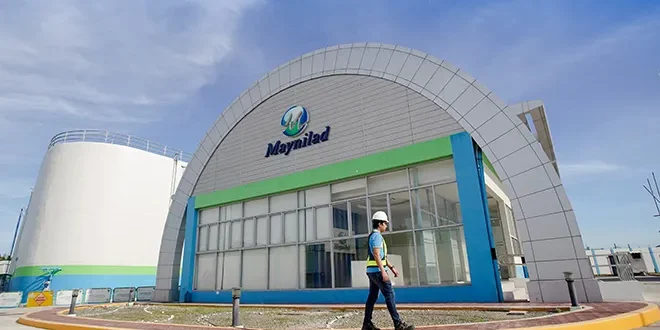
A burgeoning metro population and 24/7 usage of water contributed much to Maynilad Water Services Incorporated`s 14-percent increase in the first six months of 2026.
It is small wonder that Maynilad, with its strong water sales and customer growth, has expressed interest in providing the humongous water needs of the planned Pax Silica AI hub in New Clark City, Capas, Tarlac. This was cited by Maynilad chair Manuel V. Pangilinan himself in a talk with reporters.
Meanwhile, the group said last week its net income had reached P8.51 billion from P7.47 billion a year ago.
Maynilad’s revenues also increased by 4.1 percent to P19.11 billion against the previous P18.35 billion.
The firm’s water volume improved by 2.9 percent to 280.8 million cubic meters, while billed connections rose by 1.6 percent to 1.59 million.
Lower interest expenses and taxes also helped lift Maynilad’s bottom line.
In addition, nonrevenue water, which refers to the supply that is produced but not billed due to leaks, theft or other losses, improved to 29.7 percent as of end-June. This was pegged at 35 percent to 25 percent a year earlier.
“Our first-half performance reflects continued progress in improving service delivery, enhancing network efficiency, and expanding wastewater and sanitation coverage. These operational gains, supported by sustained capital investments, contributed to the company’s financial results,” said Ramoncito Fernandez, president and CEO of Maynilad.
“We remain focused on strengthening supply and network resilience and ensuring that our investments translate into better service and long-term value for our customers and stakeholders,” he added.
For the first semester, Maynilad spent P12.89 billion to beef up its water and wastewater infrastructure, network efficiency and reliability.
Fernandez expressed confidence about Maynilad maintaining its growth momentum.
The CEO also reiterated Maynilad’s readiness for El Niño, a climate phenomenon linked to drought, erratic rainfall in the Philippines.
“Tightening the network [and] improving our water sources outside of Angat [dam], we have reduced the dependency on and contribution to the further decline of Angat. That’s our contribution,” he said.