 The Market Monitor Minding the Nation's Business

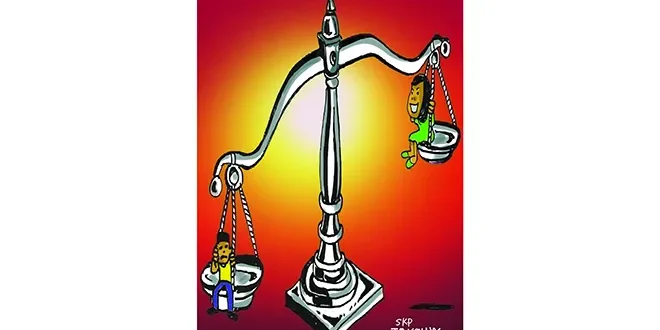
The impeachment trial has exposed more than political divisions. It has also highlighted a troubling question that goes to the heart of the rule of law: Does justice apply equally to everyone, regardless of position?
Malacañang recently pointed to the case of public school teacher Ronnel Mas, who has been detained since 2020 after posting on Twitter, now X, a message offering a P50-million reward to anyone who would kill then-President Rodrigo Duterte. Authorities treated the post as a serious criminal matter, arguing that threats against the country’s highest official cannot simply be dismissed as jokes or emotional outbursts.
The Palace drew a comparison with Vice President Sara Duterte’s publicly recorded utterance about hiring an assassin to kill President Ferdinand Marcos Jr., the First Lady, and the House Speaker should she herself be killed. Whether those remarks meet the legal elements of grave threats or another offense is ultimately a matter for prosecutors and the courts, not politicians.
Yet portions of the public debate have shifted away from determining the facts and toward minimizing the statements themselves. Some senators have argued over technicalities—whether the words constituted a genuine threat, whether there was intent to carry them out, or whether no crime exists absent actual execution. Such arguments may be appropriate in a courtroom. They become problematic when they appear to create different standards depending on who is speaking.
The Constitution guarantees equal protection under the law. If an ordinary citizen can face arrest, detention, and prosecution over statements perceived as threats against a public official, the same legal principles should be applied consistently when similar allegations involve the nation’s second-highest official. Equal treatment does not mean automatic guilt; it means equal accountability and equal due process.
Lawyers are often observed behaving according to two norms: truth is secondary to what can be proven in court, and that legal advocacy does not always coincide with objective truth. These truisms reflect the adversarial nature of litigation, where proof—not public opinion—determines outcomes. But they should never become an excuse for selective justice.
When laws appear to bend according to political influence, public confidence in the justice system bends with them. The greatest casualty is not one politician or another—it is the public’s belief that the law governs everyone equally.