 The Market Monitor Minding the Nation's Business
The United States plans to extend USD2 billion in foreign military financing to the Philippines, including USD400 million intended to strengthen the country’s defense capabilities and deterrence in the South China Sea, the White House said Thursday.
The proposed assistance will support the acquisition of defense and security equipment from American suppliers, in line with Washington’s efforts to expand military cooperation with Manila.
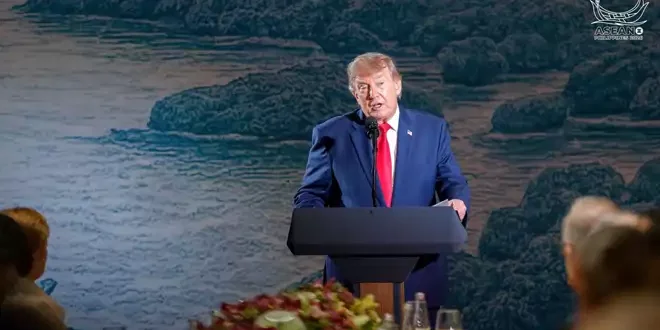
The announcement followed US President Donald Trump’s state visit to the Philippines on Nov. 18, after attending the ASEAN-US Special Summit and the Quadrilateral Security Dialogue meeting in Manila.
According to the White House, the USD400-million allocation will help the Armed Forces of the Philippines develop long-range strike capabilities, command and control systems, critical infrastructure and multidomain drone operations.
The White House said the financing is consistent with Trump’s America First Arms Transfer Strategy, which seeks to strengthen US defense manufacturing while providing military equipment to partner countries.
The two governments also disclosed additional defense technology arrangements. The Department of National Defense (DND) secured a USD37-million contract with a US company for artificial intelligence-enabled mission support.
The DND likewise committed to work with trusted American technology providers on a USD63-million project to upgrade its defense cloud infrastructure for AI applications.
Beyond military cooperation, the Philippines and the US agreed to explore an intergovernmental agreement on civil nuclear energy. The proposed framework would facilitate the participation of more American nuclear companies in the Philippine market and support the country’s energy requirements.
If finalized, the agreement would be the first US civil nuclear cooperation pact of this kind with an Indo-Pacific partner, the White House said.
Other announcements included connectivity services from US satellite firm Astranis through its AGILA satellite and Subic Grain’s planned USD40-million fuel storage facility at Subic Bay.
The two countries also committed to expanding bilateral trade in energy and agricultural products. Trump described the trade commitment as a major agreement that he said would benefit both sides.