 The Market Monitor Minding the Nation's Business
By Rose de la Cruz
AS PALAY output for the third quarter is expected to drop by 13.3 percent (year on year) to 3.25 million metric tons with the decline in harvest area of by 15.2 percent, the Department of Agriculture sees no need to ban rice imports to ensure adequate stocks in the country.
Agriculture Secretary Francisco Tiu Laurel Jr said the DA will not suspend rice imports as it moves to secure enough buffer stocks against a possible El Niño later this year.
Rice arrivals have already reached about 3.2 million metric tons, but additional imports are necessary to cover demand through the first months of 2027.
Palay output will drop by 13.3 % year-on-year to 3.25 million metric tons (MMT) in the third quarter as the estimated harvest area decreased by 15.2 percent, according to the Philippine Statistics Authority (PSA).
The projection was released on the same day the DA announced it would not suspend rice imports this year as the government builds buffer stocks against a strong El Niño expected toward the end of the year.
Based on standing crops as of July 1, palay production from July to September would be below the 3.75 MMT recorded for the comparative period last year, PNA reported.
The area expected to be harvested during the quarter declined to 777,291 hectares from 916,773 hectares a year earlier.
The weaker outlook comes after palay production reached a record high for the April-to-June period, up by 5.7% to 4.63 MMT from 4.38 MMT a year earlier – the highest level recorded for the same quarter since 1987. Growth was driven by a 6.5-percent expansion in harvested area to 1.04 million hectares from 972,822 hectares.
The increase in land harvested offset a slight decline in average yield.
National palay yield slipped by 0.7 percent to 4.47 MT per hectare from 4.50 MT per hectare in the second quarter of 2025.
Cagayan Valley remained the largest palay-producing region with 1.20 million MT or 25.8 percent of total second-quarter output.
Central Luzon (erstwhile rice granary) followed with 1.10 million MT while the Bicol Region contributed 346,270 MT. Combined production from the three regions accounted for 57.1% of the country’s palay output during the quarter.
Central Luzon recorded the highest yield at 5.94 MT per hectare followed by Cagayan Valley at 5.02 MT and the Ilocos Region at 4.94 MT.
“We need to have buffer stocks for December, January, February, March and April next year,” Laurel said during a market inspection in Las Piñas City.
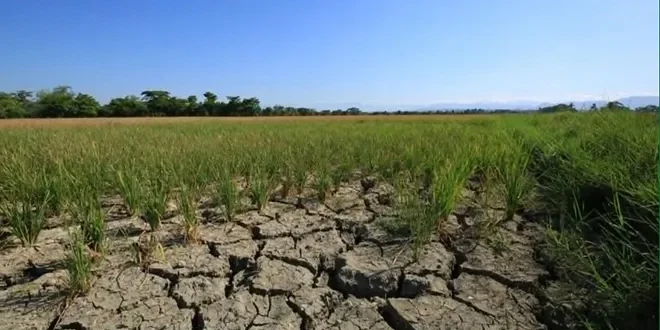
Government officials expect hotter conditions beginning November to affect farm output and possibly disrupt poultry and crop production.
Current rice inventories are expected to remain stable as harvest begins in some areas by September before the peak of October to December.
Local palay production will help replenish supply while imported stocks will serve as insurance against severe weather and other disruptions.
Laurel said the country should avoid major supply problems through the end of the year unless a strong typhoon damages key farming areas.
Retail rice prices observed during the inspection ranged from about P47 to P50 per kilo for regular varieties.
Laurel said those price levels do not justify a new price ceiling because market levels remain within the government’s target range.
The DA also appealed to traders to stop importing 5-percent broken rice to limit competition with locally produced grain.
Government warehouses are being cleared ahead of the main harvest season so the National Food Authority (NFA) can buy more palay from farmers.
NFA may purchase up to 500,000 metric tons of palay using a P20-billion fund this year.
Target buying prices were set at P21 per kilo for wet palay and P25 to P27 per kilo for dry palay.
Laurel said the larger procurement budget should help prevent farmgate prices from collapsing once the main harvest begins.