 The Market Monitor Minding the Nation's Business
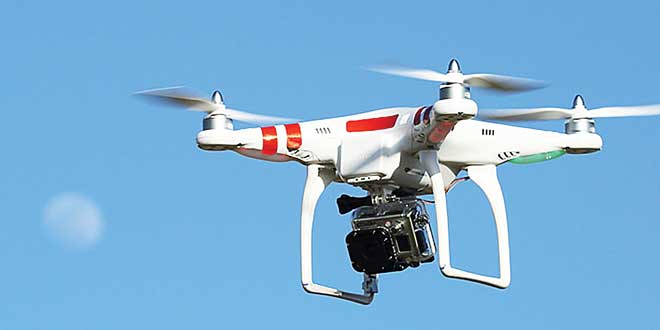
Here’s a first for the Philippines: the administration is considering the use of drones, among other measures, to monitor the progress—or lack of it—of its infrastructure-buildup strategy and to keep such public works projects free from graft and corruption.
Finance Secretary Carlos Dominguez III said that although the Duterte administration was pursuing public-private partnership (PPP) projects as part of its massive infrastructure plan, the Department of Public Works and Highways (DPWH) itself will undertake certain big-ticket projects like road improvements that it can approve faster and build cheaper than private contractors.
The government said it would likely seek World Bank assistance in the deployment of the drones for infrastructure work. The multilateral firm has advocated the use of the drone technology for transparency.
He said the government also plans to break up certain major projects into smaller ones to hasten their completion.
“For instance, rather than have one contractor for, let’s say 30 kilometers of road, we can break that up to five contracts of some kilometers each,” Dominguez said.
“We will avoid PPP where we can do it ourselves. A PPP typically takes 13 months to get it going, with the bidding and the negotiations for the contracts. So the projects that we can do ourselves, like, we have immediately, two road-widening projects in Bulacan and north of Manila, totaling about probably 40 kilometers, [these] will be done directly by the DPWH,” he said.
Dominguez said the government might also require doing the construction work 24 hours whenever possible.
For better project monitoring, Dominguez said he has discussed with officials of the DPWH and the National Economic and Development Authority (Neda) the possibility of using drones to check on whether construction works are being implemented on schedule and whether specifications are being met for particular projects.
As another measure, the government, in step with the Freedom of Information (FOI) order of President Duterte, is also putting up websites for these projects so the public could be better informed about their details and find out for themselves the progress of these undertakings.
“So this will be open to the public and available to anyone who’s interested, both, as I said, drone pictures, drone images, as well as financial contract information. So this is going to be done in that fashion,” Dominguez said.
According to the finance chief, the Duterte administration needs at least P8 trillion to close the infrastructure gap over the next six years.
Dominguez said an initial list of 18 big-ticket items worth a total of P427.5 billion has already been approved by the Neda for this unprecedented infrastructure buildup, which “is much more than what the previous administration undertook during its entire tenure in office.”
He said the swift action of the government underscores the firm resolve of the President to realize his administration’s goal of accelerating infrastructure spending to help pull down the poverty rate to below 15 percent by the time he steps aside in 2022.
As a key factor of inclusive growth, Dominguez said infrastructure has the highest multiplier effect on the economy and is also indispensable in transforming the nature of growth from consumption to investment-driven, which, in turn, would create a lot more jobs.
“Budget Secretary Ben Diokno estimates that we need to invest about P8 trillion over the next six years in infra to be at par with our neighbors. To put this amount in perspective, the total resources of the Philippines financial system is P16.2 trillion,” Dominguez said.
“That is a huge price tag, to be sure, and it is my happy duty to find the revenues to support that,” he added.
Dominguez said the government is financing its unparalleled infra program through a mixture of soft loans, grants, official development assistance (ODA) and the PPP.
The Duterte administration’s approved major infra projects so far include the improvement of the Ninoy Aquino International Airport (Naia) and the South Line of the North-South Railway Project, which will be funded through the PPP; the Asian Development Bank (ADB)-supported Metro Manila Bus Rapid Transit; the Metro Manila Flood Management Project, which is backed by the World Bank; the New Cebu International Container Port, which will get its funding from Korean ODA; and the Panglao Airport, which is supported by the Japan International Cooperation Agency (Jica), Dominguez said.
The Duterte administration’s medium term vision is to free 6 million Filipinos from poverty and transform the Philippines into a high middle-income country six years from now, with a per-capita gross national income (GNI) of $4,100, or where China and Thailand are right now.
The Duterte administration’s long-term vision is for the country to achieve high-income status by 2040, or 24 years from now, with the country having a per-capita GNI of $12,000, like where Malaysia and South Korea are today.