 The Market Monitor Minding the Nation's Business
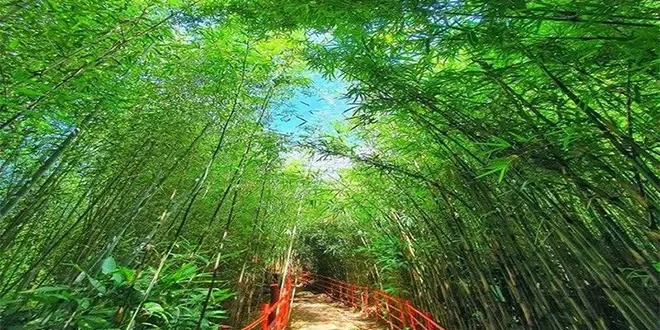
ON September 16, 2021 a simultaneous national bamboo and tree planting activity was held in celebration of the World Bamboo Day and to promote commercial planting.
Bamboo– aside from its vital role in preventing soil erosion, floods and other negative impacts of climate change– also has a lot of commercial, industrial and infrastructure uses.
What led to the commercialization and planting of bamboo in 2021 was the new regulatory framework and its declaration as a high value crop. Since then, however, little has been achieved in fully developing bamboo as a national craft and vital high value crop.
With Department Administrative Order 2021-26 issued by the Department of Environment and Natural Resources on Aug. 2, 2021 rules for the establishment, harvesting, and transport of bamboo were issued, which officially registered and encouraged commercial plantations.
In 2021, through the Plant Now Pay Later program, 2,000 families participated in the giant bamboo farming in Zambales, which launched the bamboo tourism and plantation project on Sept. 10, 2021.
In February 2020 (extending into 2021), the Department of Agriculture officially designated bamboo as a high-value crop, accelerating investments for commercial enterprise
Inadequate funding and the general lack of awareness on the importance of bamboo apparently set back the bamboo industry development, for which the DA is now seeking a $500 million loan from the Asian Development Bank (ADB) and other lenders to fund its bamboo industry development program.
Though still in the initial stages, the program has attracted interest from international financing institutions, said DA spokesman Arnel de Mesa in a recent investment forum.
Lenders are particularly interested in engineered bamboo as a potential alternative to traditional construction materials, he added.
Engineered bamboo is a durable composite material created by bonding bamboo veneers, strands, fibers, strips, or slats with a suitable resin or glue.
“They see that it can serve as a replacement for construction materials, as well as for other purposes,” he said.
The DA said China is currently the largest exporter of engineered bamboo, but the Philippines has a significant raw material supply that could be developed.
“We have substantial bamboo production, especially giant bamboo. It can be used for soil erosion control and reforestation. Plus, it has huge potential for investment and profit for our farmers,” De Mesa was quoted as saying..
Mindanao currently leads domestic bamboo production, with Bukidnon emerging as a key hub.
The DA said loan approval could come as early as next year, pending the completion of a feasibility study. The program is expected to run for about five years.
“Since it is still in the conceptual preparation stage, we need a full-blown feasibility study, which usually takes about five to six months,” De Mesa said.
The DA sees that bamboo is a high-growth sector, citing strong global demand and environmental benefits.
The global bamboo market is valued at $72.1 billion in 2023 and is growing at 7.9%.
The Philippines has an estimated 1.5 million hectares suitable for bamboo cultivation, but only 53,000 hectares or less than 3.5% of the total potential area is currently planted, the DENR reported earlier.
The DA said bamboo is also seen as a climate-resilient crop, capable of sequestering between 100 and 400 metric tons of carbon per hectare over a 10-year cycle, up to four times the rate for most tree species.
Apart from construction, the DA said bamboo is also used across multiple industries, including furniture, textiles, packaging, paper, food, and biomass energy.
Among the projects pitched by the DA at last year’s investment forum in Rome is a climate-smart bamboo plantation initiative aimed at building sustainable enterprises, supporting rural livelihoods, and strengthening value chains.
Proposed project sites include Ilocos Norte, Pangasinan, Pampanga, Palawan, and Agusan del Sur.