 The Market Monitor Minding the Nation's Business
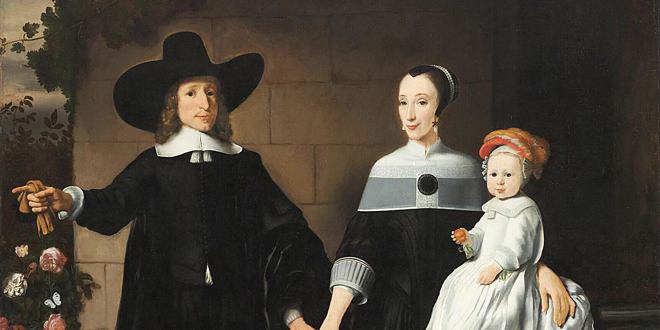
 Where Cinderella stories have sucked in even cynics with a magnetic pull, love — so like a whirlpool that a would-be king gave up his throne like Edward did– easily encrusts in universal memory. Yet, love nourished with improbabilities has run more prominently through poetry and novels, hence, like seasonal winds, waft in and out of our consciousness.
Knowing me, a friend had sent me a link to a royal love affair, which though less celebrated than that of Will and Kate or even that of Edward and Wallis Simpson, for me, is more compelling and certainly so, for the Welsh and the Swedes because Princess Lillian was their own.
My penchant for sour sop romance started in my teens with, “Desiree,” a novel on Napoleon Bonaparte. The uncle who owned the book must have picked it up for Napoleon’s exploits; for me, his first and lost love, as well as his lonely exile to Elba, had been all that remain of the more than 500 pages. And it’s been half a century ago: How does one bear such memories in their mist-dew freshness? But guess what! It’s on Kindle’s top 100 books now being read by daughters and granddaughters named after Desiree by its readers of my generation.
So engrossed on the theme of love lost, I’ve forgotten Desiree, too, became queen of Sweden, reluctant though she was, perceived to have been while Napoleon ruled France and other conquered realms with his empress, Josephine. Luckier then, had been Princess Lillian whose trust and devotion to Prince Bertil, with love they both wrapped in secret through the moon’s phases for 30 years won out when, freed of his royal duties and accepted as a divorcee, they eventually wedded.
Shouldn’t this column belong to Valentine’s, you might wonder. But “Why shouldn’t we discuss love at any time?” the friend who had thought of me, when she stumbled on the news brief about her death on the web posed the question rhetorically. The truth is, she recalled a piece I once sent her to read. In this piece, which I first titled, “Love’s Birthing,” I think I poured in quite disparate bits of me and veiled them in poetic discourse. Consider the whole piece:
“The universe was born in silence and space, a dot from the tip of God’s finger. Then it whirled from his breath but no one saw it spinning. When it burst as all birthing does, eyes that opened to it could not close to the wonder again. Swept in the mystery, they could not imagine that the wonder had been once a pinhole in the darkness.
All birthing happens the same way: Deep in the ground, a seed invisibly breaks; in the darkness of an egg, an embryo forms; in the heart of a womb, a life begins from a dot like the universe. It is as if the mystery must be kept, shielded from prying eyes and hands; as if fear or the threat of it getting aborted has always lurked alongside its creation. The threat, indeed, creeps on.
Except for humans, birthing is painless. For most living things it happens as if by magic—a bud-burst, for one and a star, blinking from billions of years away, for another. The birthing of a child is not only painful but it also comes with a rush-flood of blood as a bit of dying happens in the womb. Celebration, thus, couples a baby’s cry, announcing both new life and its first complaint.
But another kind of birthing proves to be the most painful of all—that of love. Unlike all birthing in nature, love never stops being born. Except for humans, all creatures exist, nurtured by this love. They have no hand in it—they’re simply loved.
Among humans, love involves their whole being. Thus, love denied means death, a feeling not unfounded. But where finality for other creatures is absolute, for humans it isn’t. Here lies the pain their birth foretold—that something which faces constant threat and struggles to sustain love does not die. That something is the spirit.
Known to be pure at birth, the spirit gets sullied by the million guises of love the body and its senses must filter through a substance called the self. The problem with the ‘self’ is that it is constantly torn between perversity and virtue—to love beyond its inclinations, to give and not to expect to receive, to embrace beyond the heart’s reach, as its true reach is the infinite.
Each moment is thus, a struggle: if the spirit triumphs, a rebirth takes place; if it doesn’t, each moment regresses instead of releases the spirit to regain its pure and virtuous nature. An unreleased spirit stays imprisoned even after the body frees it, eternally pained. A spirit reborn is also freed and caused to soar— back to where it came from, back to its birthing.”
“Too philosophical,” my friend had commented but later added, “But it’s your own view, after all. Apparently, life’s dips and crests had not seemed to level your teenage thinking about love.”