 The Market Monitor Minding the Nation's Business
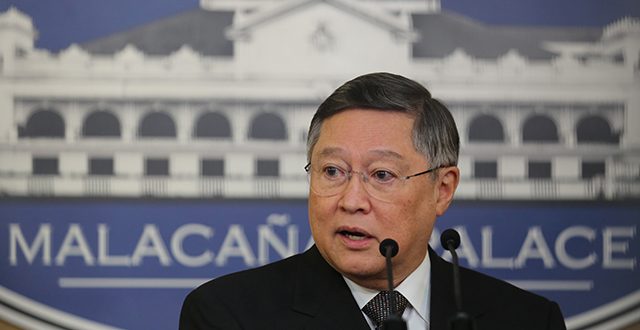
For the first time in many years, the government main revenue agencies, the Bureau of Customs (BOC) and Bureau of Internal Revenue (BIR), are expected to hit their respective collection targets for this year, given their solid performance in 2016 and at the onset of 2017, Finance Secretary Carlos Dominguez III said.
The BOC was able to improve collections from P367.06 billion in 2015 to P398.41 billion in 2016, representing an increase of 8.5 percent or P31.35 billion, Dominguez added.
As of February 19, the BOC’s year-to-date collection rate further improved to 13.3 percent, he added. Year-to-date collections from January 1 to February 19 last year was P48.59 billion, which improved to P55.06 billion for the same period in 2017.
The BIR likewise finished strong in 2016 with collections of P1.58 trillion, an improvement of 9.31 percent or about P134 billion, from the previous year’s P1.44 trillion, Dominguez said.
“The BIR and the BOC are working quite hard and we’re pretty sure that they will hit their targets for this year,” he said.
The BIR’s year-to-date collections also continued to improve at a rate of 12 percent as of February 19, Dominguez added.
Year-to-date BIR collections from January 1 to February 19 in 2016 was P180.71 billion, compared with P202.44 billion for the same period this year.
Dominguez said sweeping reforms at the BIR and BOC are now being implemented to improve taxpayer satisfaction, arrest official corruption and restore public trust in the government’s main revenue-generating agencies.
Both the BIR and BOC can carry out these reforms from their end without any need for prior congressional approval, which is why both agencies had began putting them in place within the first six months of the Duterte presidency.
But Dominguez pointed out that tax administration reforms at the BOC and BIR are not sufficient to overhaul the country’s outdated tax system and raise enough revenues necessary to fund the Duterte administration’s massive infrastructure program and record investments in human capital and social protection for the country’s poor and vulnerable sectors.
Dominguez said that aside from tax administration changes, the Department of Finance (DOF) needs to pursue tax policy reforms for the BIR and BOC to raise enough funds for the government’s ambitious public spending program and sustain high growth.
The DOF is pushing for the Comprehensive Agrarian Reform Program (CTRP), the first package of which is contained in House Bill 4774 that is now being deliberated on by the House ways and means committee.
HB 5874 was filed in the chamber by Quirino Rep. Dakila Carlo Cua, who chairs this committee.
Dominguez said CTRP’s congressional approval is crucial to the financial sustainability of the Duterte administration’s higher public spending policy because it aims to correct our tax system’s “inherent flaws, such as non-indexation to inflation of rates and large scope of exemptions and special treatments that complicates tax administration” and have for long prevented the BIR and BOC from consistently meeting, much less surpassing, their annual revenue targets.
As part of its improvements in tax administration, Dominguez said the BIR has started expanding its Large Taxpayers Service to cover the top 3,000 corporations accounting for 75 percent of total tax revenues.
Also, the BIR has started simplifying forms and procedures for small taxpayers to encourage tax compliance and ease payments, along with improving its electronic payment systems and enforcing risk-based audits to make the tax process more transparent and easier for taxpayers to comply with, Dominguez said.
The bureau is also intensifying the anti-corruption and tax evasion efforts, recruiting 12,000 young people of integrity and competence to fill the BIR’s large vacancy, he said.
The BOC, for its part, is now completing the implementing rules and regulations (IRR) of the Customs Modernization and Tariff Act (CMTA) to further step up both its anti-corruption and anti-smuggling operations, while improving the facilitation of trade.
Electronic systems at the BOC are also being upgraded to pave the way for paperless transactions that will, in turn, reduce opportunities for corruption, Dominguez said.
Administrative reforms will be supplemented with more intensive border patrols and other measures to curb technical smuggling, including the use of fuel marking, he said.
As in the BIR, Dominguez said the customs bureau is also eyeing the recruitment of about 3,000 young and talented people “willing to work in a corruption-free BOC.”
As for the CTRP, Dominguez said the proposed tax reforms will help the Duterte administration free some six million Filipinos from poverty by 2022, and let the country achieve by then the status of an upper middle-income economy with a per capita gross national income of at least $5,000, or close to where Thailand is today.
HB 4774 aims to lower personal income tax rates for the benefit of low- and middle-income earners, and to offset the projected revenue loss by adjusting the excise taxes on oil products and automobiles, and broadening the Value Added Tax (VAT) base but retaining exemptions for seniors and persons with disabilities.