 The Market Monitor Minding the Nation's Business
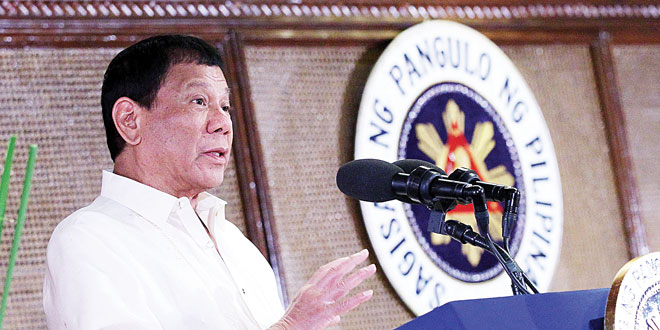
By Chito Lozada
First of two parts
When President Duterte mingles with the region’s leaders and business executives at the Belt and Road Forum for International Cooperation in Beijing, he is opening the country to be among the main beneficiaries of an initial $100 billion that China is pumping into the initiative. He is also expected to further boost the country’s economic ties with China and the rest of the world.
During his state visit to China last October 2016, Mr. Duterte and Chinese President Xi Jinping agreed for more cooperation and join Xi’s flagship Belt and Road initiative.
The initiative will launch a series of infrastructure projects across three continents, linking Asian markets with economic circles in Europe and Africa.
The initiative is China’s way of reaching out to its neighbors which complement the Duterte administration’s massive infrastructure build-up called “Build, Build, Build” which would usher in the country’s “golden age of infrastructure” in the next five years.
Some of the big-ticket projects identified under the Build, Build, Build program will be funded by China. An estimated P8 trillion in funding is needed for the ambitious project of Mr. Duterte.
Aside from Pres. Duterte, more than 25 heads of state are expected to attend the forum, including Russian Pres. Vladimir Putin.
Joining Pres. Duterte in the Chinese capital are his economic and infrastructure secretaries who will present Chinese businessmen the administration’s economic policies through “Dutertenomics”.
The Chinese program will also boost the country’s pursuit for technological advances.
The Belt and Road initiative will evolve into a “smart highway carrying information, knowledge, and services across continents, not just goods,” predicts a US expert.
“These technologies will certainly transform cities in the next decades…we expect there will be a similar transformation in infrastructure around the world, including the Belt and Road initiative, “Jerry Hultin, co-founder of Global Futures Group (GFG), a consulting firm on creating Smart Cities, told Xinhua at a recent meeting hosted by the World Trade Week New York City.
Chinese Foreign Ministry Affairs listed 1,500 delegates, including 29 heads of states and government leaders, from 130 countries and international organizations will attend the forum including Mr. Duterte.
Other Association of Southeast Asian Nation (Asean) leaders who will attend the Forum include: Indonesian President Joko Widodo, Myanmar State Counselor Aung San Suu Kyi, Malaysian Prime Minister Najib Razak, Cambodian Prime Minister Hun Sen, Lao President Bounnhang Vorachit, and Vietnamese President Tran Dai Quang.
The Philippines is the rotating chairman of the 10-member Asean which is celebrating its 50th anniversary this year.
Chinese Foreign Minister Wang Yi said the Belt and Road Initiative has been gaining wide support from international community since it was presented by President Xi in 2013.
The Forum has the theme: “Strengthening International Cooperation and Co-building the ‘Belt and Road’ for Win-win Development.”
The opening ceremony will be held in the morning of May 14 to be followed by high-level conference.
The Leaders’ Roundtable Summit is set on May 15 with President Xi joining his fellow government leaders from Asia, Europe and Africa.
Yi said the forum will focus on getting consensus where documents will be issued on leaders’ roundtable summit to further identify goals and principles for cooperation, and deepen the implementation of docking strategies.
“In the meantime, taking this forum as an opportunity, all parties will expand cooperation consensus, identify cooperation goals and specify cooperation measures,” he said.
It is expected that China will negotiate and sign cooperation documents with nearly 20 countries and over 20 international organizations.
At the forum, cooperation directions where all parties will negotiate and determine important bilateral and multi-lateral cooperation fields for the next stage, draw up cooperation plans for the next five years or longer, and detailed action plans will be identified.
China will also discuss with all sides to introduce a series of significant policies and measures including completing and strengthening financial cooperation mechanism, constructing comprehensive service platforms in science, technology, and environmental protection as well as other fields and enhancing exchange and training of professional talents of every domain.
The Belt and Road Initiative aims to resurrect the ancient Silk Road Economic Belt and 21st Century Maritime Silk Road in at least 65 countries in Asia, Europe and Africa.
Based on the Belt and Road Big Data Center of the State Information Center, China’s total value of trade with Belt and Road countries has reached $953.59 billion in 2016.
China has committed $100 billion for Belt and Road, already investing more than $50 billion in countries along the Belt and Road routes since 2013.
Yi said China will take the Belt and Road Forum as an opportunity to create more open and efficient platform for international cooperation.
China will maintain close communication and coordination with all present parties, ensure the complete success of the forum, push the forum for more fruitful outcomes, open up the new situation for international cooperation of the “Belt and Road” so as to elevate the “Belt and Road” construction to new highs,” Yi said in a press statement.
“At present, the foundation for global economic recovery is not solid, trade investment remains weak, and growth impetus is also unstable. There is an urgent need of upgrading fundamental infrastructure construction and connectivity among every country and every sub-region,” he added.
(Next week: Chinese local officials offers cooperation in several fields)