 The Market Monitor Minding the Nation's Business

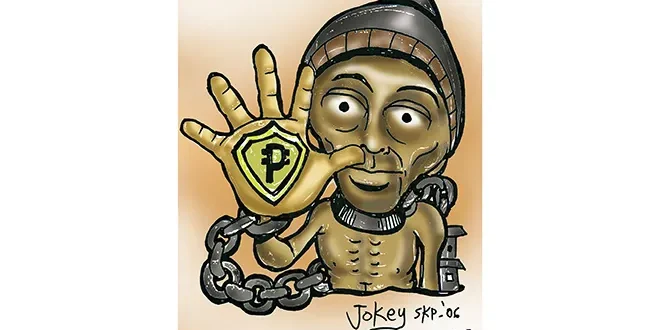
Government found good reason to celebrate when recent statistics showed that fewer than one in 10 Filipinos are living below the poverty line. But before declaring victory, it should ask a more important question: How many Filipinos are actually living decently?
Economic Planning Secretary Arsenio Balisacan’s announcement of the declining poverty rate sounds encouraging. Yet, Ibon Foundation raises a legitimate concern: the government’s definition of poverty may be so low that millions struggling with food, housing, transportation, education, health care and other basic expenses are simply excluded from the statistics.
The 2025 annual per capita poverty threshold of P35,121—or just P96.22 per person per day—illustrates the problem. For a family of five, the threshold amounts to only P14,634 a month. A family earning slightly more is officially classified as non-poor, even if its income is nowhere near enough for a secure and decent life.
This is where statistics can become misleading. A family may be technically above the poverty line while constantly choosing between food and electricity, school expenses and medical bills, or rent and transportation.
The disparity becomes even more striking when wages are considered. Ibon estimates that a family of five needs P1,277 a day for living wage, while the average minimum wage is only P512. That means a minimum-wage worker earns barely 40 percent of what a family of five supposedly needs for a decent life.
Government assistance programs are necessary safety nets, particularly for the most vulnerable. But poverty cannot be permanently solved through subsidies and dole-outs that merely push families above an artificially low statistical line.
Real measure of progress should be whether Filipinos can find stable, decent-paying jobs, afford nutritious food, keep their children in school, obtain adequate health care and live without constantly worrying about their next bill.
That requires more than poverty programs. It demands stronger Filipino industries, productive agriculture, better public services and an economy capable of creating millions of decent livelihoods.
This is called window dressing, utilized by government drum-beaters to project growth despite stark realities.
Government should celebrate when fewer Filipinos are poor. But it should not confuse crossing a statistical threshold with escaping poverty. The goal must not simply be survival above the poverty line, but a secure and dignified life beyond it.