 The Market Monitor Minding the Nation's Business
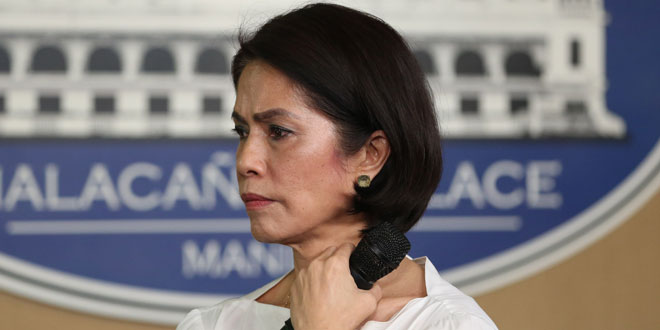
The closure and suspension orders issued against mining operations by former Environment Secretary Gina Lopez had no impact on the local production of nickel ore, Chamber of Mines of the Philippines (CMP) Legal and Policy Vice President Ronald Recidoro said.
At the recent 2017 National Conference of the Philippine Extractive Industries Transparency Initiative, Recidoro said the closure and suspension orders were not enforced due to a provision under Administrative Order (AO) 22 or the Prescribing Rules and Regulations Governing Appeals to the Office of the President.
“The suspensions and closures did not actually push through because under AO 22, any appeal to the Office of the President automatically stays the enforcement of the decision. So the 23 (mining operations for closure) and five (for suspension), all of them appealed. The decision has stayed and they continue to operate as usual,” he said.
Lopez’s as head of the Department of Environment and Natural Resources (DENR), initially suspended 10 mining operations—four in Zambales, and two each in provinces of Palawan, Eastern Samar, and Surigao.
“But if you look at these 10 operations, most of them were already suspended, way before Secretary Lopez came into office. So, you won’t be seeing any impact there,” Recidoro said.
After the first suspension order to the 10 mines, the for
mer DENR chief announced the closure of 23 mining operations and the suspension of another five.
By virtue of AO 22, the closure and suspension orders did not push through since all
companies appealed to Malacañang Palace.
“Had those closures and suspensions pushed through, they would have impacted 50 percent of our nickel production for the year,” Recidoro said.
On the cancellation of 75 mineral production-sharing agreements (MPSAs) in watersheds nationwide, the Chamber of Mines official noted that these operations have not yet started.
“They are just agreements, so no production to be impacted there,” he added.
“Overall, I would say that the last 10 months, although it’s been very tumultuous to say the least, there is no real impact yet on production,” he said.
He however pointed out that the big impact would probably be on investor confidence.
“Investments rely on the stability of the policy. For so long as investors do not see that, they will be hesitant to invest in the Philippines. We’re hoping that moving forward, we will be sending the right signals from now on, that we are a reliable partner and we can be a stable area for high-risk investments like mining,” he stressed.
Strong governance not absolute ban
A strong governance framework for the extractive industries, not an “arbitrary” ban on this sector, will let the country “get the best of both worlds,” which is creating wealth for the people from the country’s natural resources and, at the same time, ensuring the sustainability of the environment, Finance Secretary Carlos Dominguez III said.
Dominguez said the Duterte administration “will be firm but fair” in exercising strong governance while practicing transparency in all its processes and abiding by global best practices in ensuring sustainable development.
“The solution is not to arbitrarily ban extractive industries, whatever contractual obligations government has with investors,” said Dominguez in his keynote speech at the national conference of the Philippine Extractive Industries Transparency Initiative (PH-EITI) held at the Manila Hotel.
He said, “The solution is to improve governance so that we get the best of both worlds: ensuring the sustainability of our environment on one hand and creating wealth for our people from our natural endowments on the other.”
To ensure transparency, Dominguez said suspensions “on the basis of unseen audits” and “honest industries subjected to levies without legal basis” would “never again” happen on the Duterte watch.
“One could be environment-friendly and business-friendly at the same time. They are not mutually exclusive inclinations. Only the zealots think they are,” he added.
“We need to encourage and not suppress extractive industries. They are necessary to help our economy develop, to bring the revenues that government needs and to create opportunities for the communities that host these industries,” Dominguez said.
Dominguez, who co-chairs the Mining Industry Coordinating Council (MICC) with the Secretary of the Department of Environment and Natural Resources (DENR), likewise expressed his support for the Philippines’ participation in EITI to set standards of honesty and openness, along with benchmarks of responsibility to communities hosting the extractive industries.
He lauded government agencies, civil society organizations and the local government units (LGUs) involved in the PH-EITI’s “good work” of encouraging all stakeholders to adopt global best practices in governing extractive industries.
“If we have full disclosure of what was taken and what was earned, then we can have a full accounting of what needs to be remediated and how much the commons deserve,” Dominguez said.
He said “only full transparency can build an atmosphere of trust among stakeholders” and assure the public “that businesses are run with integrity and regulations enforced with competence.”
“Otherwise, there can only be a cloud of uncertainty, suspiciousness and fear. With such an unhealthy cloud, there will be no social peace,” he said.
A former DENR secretary, Dominguez noted that good governance and dialogue were not always the norm in the extractive industries, as he recalled the time when poor governance resulted in massive deforestation and left the country with only 11 percent of its forest cover, which then led to calamities involving poorly regulated mines.
“Businesses engaged in extractive industries were once vilified by environmental zealots. Instead of dialogue and broad agreement on the standards of governance, there was recrimination,” he said.
Dominguez said “poor governance caused us to lose our forests without emancipating our people” which “should never happen again.”’
“Good governance, in contrast, should embolden us to attract investments in extractive industries, confident that we will be able to assure sustainable forestry and mining,” Dominguez said.
“A strong governance framework will ensure that mining companies remediate the mining sites. This is, after all, what government is all about: it enables the community to do things, to create wealth that benefits all and to draw from the environment without diminishing it,” he said.
He said a proper governance framework will enable Filipinos to benefit from investments in extractive industries, which on their end, should always be transparent and vigilant against causing harm to the environment and the people.
Last year, Dominguez required treasurers of LGUs to include in their quarterly and annual financial reports to the DOF all environment and natural resources revenues and expenditures, particularly the payments made by the mining and other extractive industries to their respective LGUs.