 The Market Monitor Minding the Nation's Business
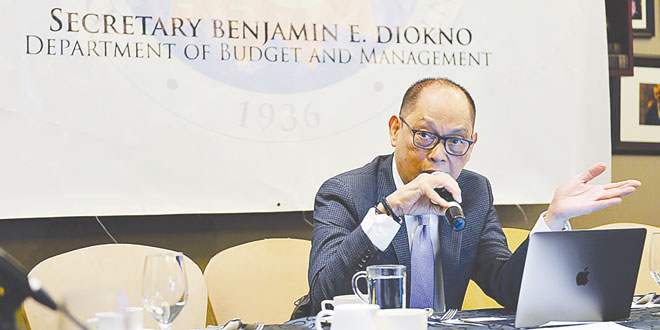
With the Budget Reform Act being tagged as one of the priority bills up for early approval in the Senate, the national government is well-positioned to shift to an annual cash-based budgeting system starting next fiscal year.
The measure will mandate the more disciplined use of the National Budget while also enhancing transparency and accountability in in the budget process.
“We are optimistic that the Budget Reform Bill will be passed into law before President Rodrigo Duterte delivers his State of the Nation Address (SONA) in July,” said Budget Secretary Benjamin Diokno.
“This reform initiative will secure the gains in public budgeting over the past two years as we have strived to instill efficiency and integrity in the budget process,” he added.
The landmark Budget Reform legislation is intended to support the government’s expansionary fiscal policy where investments on public infrastructure will rise from 5.4% of Gross Domestic Product (GDP) in 2017 up to 7.3% in 2022 with the Build Build Build Program.
Likewise, spending for human capital development, such as education, healthcare, and social protection, will rise from 8.5% of GDP in 2017 to 9.2% in 2022.
In the bigger picture, more efficient government spending will fuel the country’s economic growth, which is targeted to reach 7% to 8% in the medium-term. This rate of economic expansion is projected to spur development across regions and reduce the poverty rate from 21.6% in 2015 to at least 14% in 2022.
In an annual cash-based budget, contracts intended to be implemented for the fiscal year should be fully delivered by the end of the year.
This is in contrast to the multi-year obligation-based budgeting system where it is enough for the government to enter into a contract or “obligate funds” without requiring the actual delivery of goods and services within the year.
In terms of payment horizon, the annual cash-based system will also allow for a three-month Extended Payment Period (EPP) after the fiscal year provided that the goods and services have already been inspected, verified, and delivered by December 31 of the said fiscal year.
Again, this is an improvement from the old system where payment may be done well beyond the end of the fiscal year.
“The shift to an annual cash-based system is a logical progression in our budget reform agenda,” said Diokno.
“We started from limiting the validity of appropriations from two years to just one year starting the 2017 National Budget,” he added.
“The next step is to transition to a cash-based framework because we believe that obligations are mere intents and not actual expenditures,” he added.
The Budget Reform Act has already been approved in the Lower House by a vote of 158 in favor, 8 against, and 1 abstention. It has also been sponsored in the Senate and deliberations are scheduled once the Upper Chamber resumes its regular session.
Diokno also recently headed the Philippine delegation in the International Monetary Fund (IMF)-World Bank Group (WBG) Spring Meetings held on April 18 – 23, 2018 in Washington D.C., USA. Joining the Budget Secretary in the official delegation were Ambassador Jose Manuel G. Romualdez, Minister Jose Victor Chan- Gonzaga, DOF Usec. Gil Beltran, Neda Usec. Rolando Tungpalan, Neda Usec. Adoracion Navarro, DOF Asec. Maria Edita Tan, DBM Asec. Amenah Pangandaman, and CCC Commissioner Rachel Herrera.
Some of the main points and recurring topics in the Budget Secretary’s series of discussions and meetings during the three-day IMF-WBG event are the Philippines’ climate change initiatives, as well as the administration’s spending priorities – the ambitious Build Build Build Program and the hefty investments for social sector development.
Diokno reiterated the lofty goals of the administration, namely, to push the Philippine economy to upper middle income status by 2022, and to reduce poverty incidence from 21.6% in 2015 to 14% in 2022.
“A modern and comprehensive infrastructure network is a key driver for inclusive economic growth,” Secretary Diokno explained.
“The government has committed to spend between 8 to 9 trillion pesos (or 160 to 180 Billion US dollars) for infrastructure development from 2017 to 2022.
We will ramp up infrastructure spending, reaching to as much as 7.3% of GDP in 2022.” Also, for 2018, 37.8% of the National Budget is allocated to social services.
“The Philippines’ median age is 23 years old…we consider that our young people can be an asset or a liability.
Given the right mix of programs, the government can take advantage of the opportunity to develop this young population into an agile and competent workforce,” Secretary Diokno explained.
With regards to the Philippines’ climate change initiatives, Diokno highlighted the country’s Climate Change Expenditure Tagging (CCET), “CCET is a process of classifying each government agency’s climate change-related expenditures, and tagging them as to whether they are towards climate change mitigation or adaptation.”
“We are one with the rest of the world in addressing the impacts of climate change. Trust that our government will continue to introduce and implement initiatives to contribute towards climate reform in the coming years,” he said.
Meanwhile, Diokno also attended the Korea Research Institute (KRI) – Office of the Public Sector Development Commission (OPDC) Reform Policy Symposium and Regional Workshop in Hanoi, Vietnam on April 26, 2018.
The DBM Secretary gave a keynote address on the Duterte administration’s public sector reforms, highlighting the recently passed Tax Reform for Acceleration and Inclusion (TRAIN) Law and the proposed Budget Reform Law, “Basically, the tax reform will fuel our development priorities so we can move from where we find ourselves at present, to our desired destination.”
In terms of budget reforms, the DBM Secretary noted that by 2019, the government is shifting to an annual cash-based budget from a two-year obligation-based budget.
This is seen to ensure faster budget execution and timely delivery of government services.
“Reforming the government is not an easy task. And I know you will all agree with this.
In fact, normally, any big change will be met with resistance […] because they are not used to seeing radical changes being pursued vigorously, changes that embody what “real change” truly means.
But this is what the Filipino people really want, for the country in general, and for their family and themselves. And this is what the Duterte Administration aims for, and will consistently and persistently endeavour to achieve,” he added.