 The Market Monitor Minding the Nation's Business
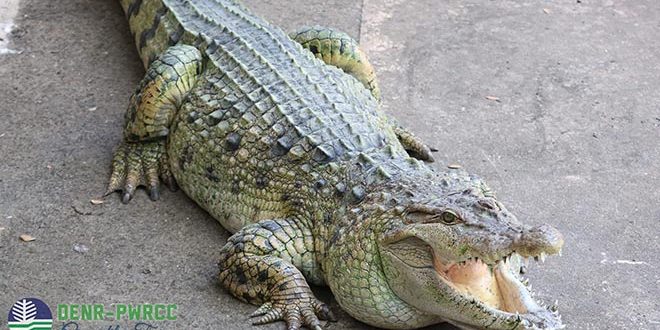
Habitat loss and human persecution – brought about by myths and legends – have caused the decimation of both fresh and saltwater crocodiles by 82 percent, said Department of Environment and Natural Resources (DENR) Secretary Maria Antonia Yulo-Loyzaga at the 29th Crocodile Conservation Week held in Puerto Princesa City.
“Despite destructive activities by humanity, the crocodiles, now considered critically endangered species – survived for millions of years and we are just celebrating their contribution to the world and humanity only for the past 29 years of operating the Palawan Wildlife Rescue and Conservation Center’s existence,” she said.
“The Philippine crocodile Mindorensis, holds the distinction of being the rarest crocodile specie globally, facing an alarming 82 percent decline in known localities,” she said, adding that their threats are habitat loss and human persecution.
“As a critically endangered species, the conservation of Philippine crocodile is important to local communities in terms of both cultural and economic value, and assess the potential to support livelihoods related to the ecological tourism that is actually present today,” the Star reported her saying.
She said the current wild population stands at over 500 for Philippine crocodiles and over 6,000 for saltwater crocodiles.
The Palawan Wildlife Rescue and Conservation Center (PWRCC), formerly Crocodile Farming Institute, now shelters at least 1,000 Crocodylus mindorensis and Crocodylus porosus, she said.
“As I heard this morning, there are at least 68 fresh and saltwater crocodiles, including those found in the different parts of the Philippines, as far as Mindanao, composed of hatchlings, juveniles, sub-adults, and adults,” she added.
The PWRCC has been successful in breeding Philippine crocodiles and saltwater crocodiles as sources of stocks to replenish wild populations, Loyzaga said.
The center also serves as the national repository of rescued crocodiles that can be used for commercial breeding and source of breeder stocks, she noted.
“PWRCC remains an ecotourism destination in Puerto Princesa, contributing to the social, economic development and well-being of local communities that are engaged in the protection and conservation of this valuable natural resource through activities such as guided tours and local crafts,” she added.
“One of the goals and objectives of the facility is to remove such species from the International Union for Conservation of Nature list of critically endangered species,” Loyzaga said.
Yulo-Loyzaga acknowledged the efforts of the partners of the Department of Environment and Natural Resources (DENR) in protecting and conserving the country’s endangered species.
She called man as the ‘wildest’ of all species in the planet because “only man has the power to alter our landscape, alter our seascape, threaten species, and make our own survival the primary purpose of our existence rather than the preservation of the environment that we actually inherited from our ancestors.”
“As a critically endangered species, the conservation of the Philippine crocodile is important to local communities in terms of both cultural and economic value, as it has the potential to support livelihoods related to today’s ecotourism,” she said noting that the Crocodile Farming Institute began through the partnership with Japan International Cooperation Agency and the Philippines.
ROSE DELA CRUZ