 The Market Monitor Minding the Nation's Business
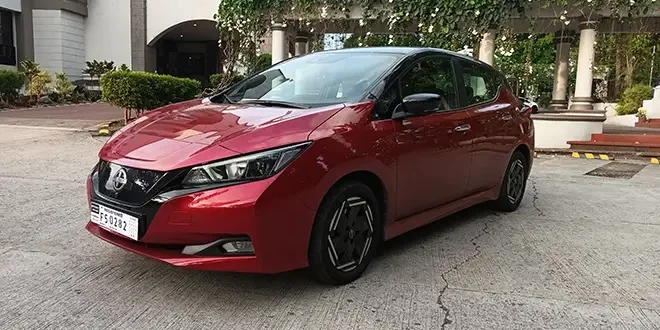
I feel excited when the Gateway Group, the biggest multi-brand car dealership company that operates in key cities in the Philippines, offered me to try and test-drive the Nissan Leaf.
The second-generation Nissan Leaf that was loaned to me for almost a week is my first fully electric car driven so far despite a number of EVs that are already flooding the country these days.
Yes, it was my first time to drive such an electric car here in Manila after more than a decade. I drove one EV way back in 2011 when I attended the Michelin’s 11th Challenge Bibendum at the Berlin’s Airport Tempelhof in Germany. The event showcased a large exhibition of low carbon vehicles, fuels and related technologies and attended by more than 4,000 stakeholders from various auto industries all over the world. Surprisingly, there were around 120 vehicles — many of them were prototypes, covering all areas of environmentally friendly vehicles such as electric city bikes, passenger cars, trucks and buses – that took part.
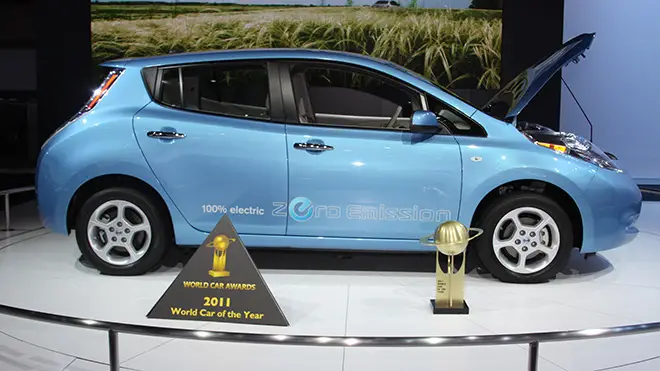
And one of the vehicles I got to drive in that event was the first edition Nissan Leaf, which was later on feted with the World Car of the Year Award also in that year in the United States.
Gateway’s Alvin Lu was equally enthusiastic when he called me to try the new Nissan Leaf, which is exclusively distributed by the Gateway Group in all its Nissan dealerships such as Nissan Makati Mantrade, Nissan Global City, Nissan Manila Bay, Nissan Matina and Nissan Tagum both in Davao, Nissan Palawan, Nissan Bacoor, Nissan Cebu South, Nissan Otis, and Nissan Abad Santos.
The Nissan Leaf 40k Wh is the one that is being sold locally and the one that arrived in the house has a very appealing magnetic red with pearl black rook color. And what makes the second generation Nissan Leaf interesting is that it is now complemented by a suite of Nissan Intelligent Mobiity features that will give you driving comfort and security while on the road.
It is a 5-door hatchback that has a 350v battery powered by an AC Synchronious motor that cranks out 150 PS power and a 320 NM torque. A full single charge would give you 311 km of travel, which is so convenient for city driving.
I decided to use it for two out-of-town sorties — both were visits to two religious venues that were far east and down south of Manila. With my youngest Juan Miguel changing at the wheels, I had the chance of being a passenger as well together with my wife Cecil from time to time.
Driving the Nissan Leaf is so easy and very comfortable, what with the very quiet ride and a plethora of driver-assist features onboard. This is a car that you can enjoy as your everyday vehicle or for any rugged, weekend get-away sorties.
Highway driving is so easy as the Intelligent Cruise Control takes over the workload of the driver as it automatically controls acceleration and deceleration when cruising. The Intelligent Around View Monitor that is already the standard feature in many Nissan vehicles gives you a virtual 360 degree view of the surroundings while other onboard cameras always assist you whether you are reversing or turning left or right.
Never underestimate the power of the Nissan Leaf as its 100 percent electric drivetrain delivers instant acceleration once you hit the pedal. You won’t feel any lag or noise from the battery that is sitting low on the chassis of the car during acceleration. The road is all yours when you hit the open highway while you and your passengers are comfortable and very cool inside with the very iconic Nissan airconditioning system.
One very unique feature of Nissan Leaf is the e-Pedal that you can use to start from a standstill, accelerate and brake, and bring the car to a complete stop and hold it in position while using only the accelerator. No more using the accelerator and the brake one after the other. It is designed with a regenerative braking system that can recharge while decelerating or braking. This also saves you more electricity for the battery as it is more economical same as in the Eco Mode.
In my experience, one’s driving habit is the essential factor why battery is consumed much faster in a Nissan Leaf. And you can be informed of that through the dashboard where you can see the available battery charge and even the kilometer reading as they get lesser as you step on the gas harder. Easy driving means saving on the battery charge and less trip to the charging station.


Just like in other EVs, it is better to charge it once the battery goes down to a level where you don’t need to be afraid in looking for a nearby charging station. It can be charged at home overnight with a standard 220V power source with a dedicated socket (approximately 18.5 hours from low battery indicator to full charge. A fast-charging WallBox Charger can be installed in your home and it is also available in some other public places like malls (approximately 7.5 hours to full charge).
But, I rather chose to run to the nearby Gateway Mantrade in Pasay Road, Makati that is near our place for recharging which is free as it only takes 40 minutes for an 80 percent charge from having a low-battery indicator.
In the first-gen Nissan Leaf I drove in Berlin, one feature on the dashboard is the availability of a nearby charging station being shown once the battery indicator says it’s already low.
Overall, I am really impressed with this Nissan Leaf as it gave me a certain glimpse of the future of mobility not only in this country but also in the world. With the increase in gas prices, driving one will be very economical especially when you use the road more often.
By the way, the exclusive distributor of Nissan Leaf in the country, the Gateway Group, sells it for P1,998,000. Go and ask for a discount if you are paying it cash. There’s a 20 percent downpayment of P199,000 if you are paying it for 60 months at P41,516 monthly. – ANDY SEVILLA