 The Market Monitor Minding the Nation's Business
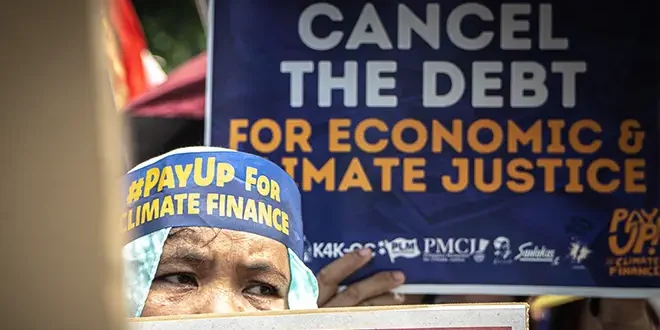
Philippine climate activists marched to the U.S. Embassy on Monday to call on the leaders of the Group of 7 (G7) to deliver climate finance to developing countries in anticipation of the 50th G7 Summit on June 13.
The march was conducted as part of a series of protests across South and Southeast Asia and led by the Asian Peoples’ Movement on Debt and Development (APMDD), whose campaigners have been calling for climate finance that will enable developing countries to address climate change.
“The climate crisis is escalating, and people in the Global South are suffering from its increasingly devastating impacts,” said APMDD coordinator Lidy Nacpil.
Extreme heat in South and Southeast Asia has forced school closures, strained power grids, disrupted food production, and caused deaths due to heat stroke.
In the Philippines, the Department of Agriculture disclosed that this year’s El Niño has cost 9.5 billion pesos in losses, devastating over 175,000 farmers and fisherfolk. “The unprecedented heat in most of Southeast and South Asia, and the floods in southern Brazil, remind us that developing countries are hit the hardest despite contributing the least to the climate crisis.”
Nacpil added: “The rich, industrialized countries of the Global North are most responsible for causing this crisis with their historical and current greenhouse gas emissions, and therefore obligated to pay the costs of mitigation, adaptation, loss and damage, and ensuring a just transition in the Global South. If they do not deliver the amount we need, we cannot limit average global temperatures to below 1.5C.”
Under the UN Framework Convention on Climate Change, developed countries agreed to provide climate finance to cover the costs of developing countries’ climate programs and projects.
Climate justice activists emphasize that climate finance must be adequate, public, and new and additional to other standing financial obligations of developed countries, such as official development assistance.