 The Market Monitor Minding the Nation's Business
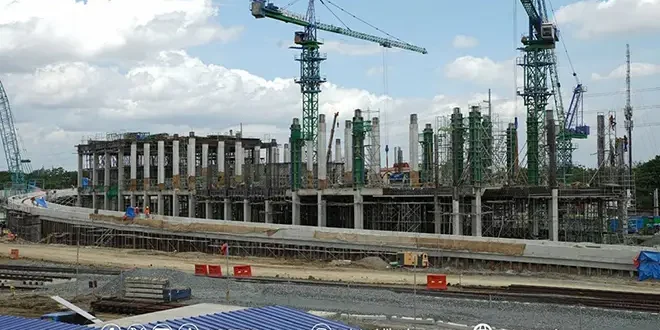
The construction of the Subic-Clark- Manila-Batangas railway, a flagship project of the Luzon Economic Corridor, will start in 2027.
Department of Trade and Industry (DTI) Secretary Alfredo Pascual said the US$3.2 billion railway project is projected to boost economic activities across the Luzon Economic Corridor.
“The development of the Luzon Economic Corridor is among the outcomes of the Trilateral Leaders’ Summit of the US, Japan, and the Philippines last April,” said Pascual in a briefing during the Philippine Economic Roadshow in Tokyo, Japan.
“The project design is on track for completion by 2026, with construction set to commence in 2027,” added Pascual.
Pascual said the railway project, which will spawn 250 kilometers, will connect Subic to Batangas passing through Metro Manila.
It is expected to reduce transportation costs, and promote better economic integration.
“It will connect major ports, industrial parks, special economic zone, and education and employment centers in the former US bases, the capital city, and a port province south of Manila,” Pascual explained.
He said the Clark International Airport will also be expanded to support the Luzon Economic Corridor.
The Clark National Food Hub, another project being pursued for the development of the Luzon Economic Corridor, will also start construction next year.
Aside from enhancing connectivity between Subic, Clark, Manila and Batangas, the development of an economic hub is expected to accelerate investments in high-impact infrastructure projects including railways, port modernization, clean energy, semiconductor supply chains, and agribusiness to drive economic growth.
Pascual announced that the Philippines welcomes investments in Tier I activities, which include all forms of recycling, privately owned materials, recovery facilities, wastewater treatment, as well as facilities for old public utility vehicles and industrial tree plantations.
Investment opportunities for Tier II activities aim to fill the gaps in Philippine value chains for green ecosystems, health care, defense, energy, food, and agriculture.
Pascual noted that the Philippines is also keen on investments in electric vehicle assembly, renewable energy (RE), electronic devices like wearable solar device, integrated circuits for smart grid and RE, bioplastic and biopolymers, energy efficiency and conservation projects, energy storage technologies, and organic agriculture.