 The Market Monitor Minding the Nation's Business
By Rose de la Cruz
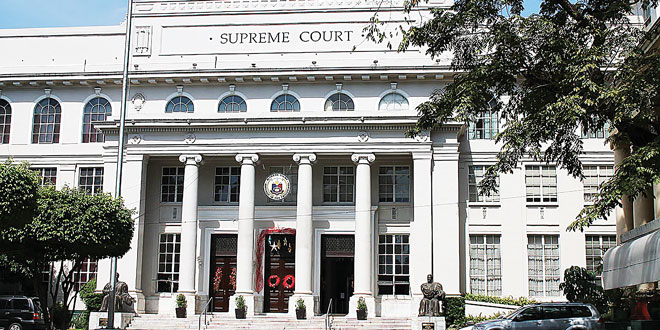
The Supreme Court upheld the Manila Seedling Bank Foundation’s use of the property that had been given it by virtue of Proclamation 1670 issued by then President Ferdinand Edralin Marcos over 7 hectares of property owned by the National Housing Authority but which the QC government issued in 2003 a zoning ordinance reclassifying the property.
The SC ruled: Local ordinances cannot contravene the Constitution or any law.
Said property was used by the Foundation as an Environmental Center and plant nursery for the government’s reforestation program and leased portions of it to garden centers, pet shops, and cut flower centers.
In reality, the property was parceled out and sold to property developers for the establishment of high rise towers for condominiums and businesses, for which the city government enjoyed collecting taxes and other incomes.
The SC en banc ruling dated July 30 penned by Associate Justice Ramon Pauil Hernando said the zoning ordinance deprived the Foundation of its use and found the ordinance to be ultra vires or beyond the City’s scope of authority to issue.
“Proclamation No. 1670 of then President Ferdinand E. Marcos granted usufructuary rights to the Foundation over a seven-hectare property owned by the National Housing Authority (NHA) at the corner of Quezon Avenue and E. De Los Santos Avenue (EDSA) in Quezon City,” the SC said.
In 2003, the Quezon City Council enacted the Amended Quezon City Zoning Ordinance, which re-classified the property into a Metropolitan Commercial Zone, and a portion of it into an Institutional Zone. In 2012, the City refused to issue a locational clearance to the Foundation; consequently, the Foundation failed to renew its business permit. This prompted the Foundation to file a petition for prohibition against the City.
The Regional Trial Court (RTC) issued a writ of prohibition, ordering the City to stop enforcing the Ordinance on the property and to issue the Foundation a locational clearance and business permit.
Meanwhile, the City foreclosed and sold the property at a public auction for non-payment of real property tax. The Foundation petitioned for prohibition and injunction with the RTC, but the RTC dismissed the Petition, and this was affirmed by the Court of Appeals.
The City and the Foundation filed their respective petitions for review on certiorari before the Supreme Court.
The Court held that the City lacked the authority to reclassify the property for a use different from that originally intended by Proclamation No. 1670, a national law. Local ordinances cannot amend a national law.
The Court said:
“[L]ocal ordinances that contravene State-enacted legislation [are] null and void since LGUs (local government units) merely derive their power from the State legislature, as such, they cannot regulate activities already allowed by statute. Municipal ordinances are considered inferior in status and subordinate to the laws of the state; thus LGUs have no power to regulate conduct already regulated by the state legislature.”
The Court also ruled that the City cannot foreclose and seize the property for non-payment of real property tax, as it is owned by NHA, a tax-exempt institution.
But since this exemption does not extend to the beneficial users of NHA’s properties, such as the Foundation, then the City may satisfy its tax claim not through a foreclosure, but by directly assessing the Foundation.
As the City wrongly foreclosed the property, the Foundation may file the proper case against the City.