 The Market Monitor Minding the Nation's Business
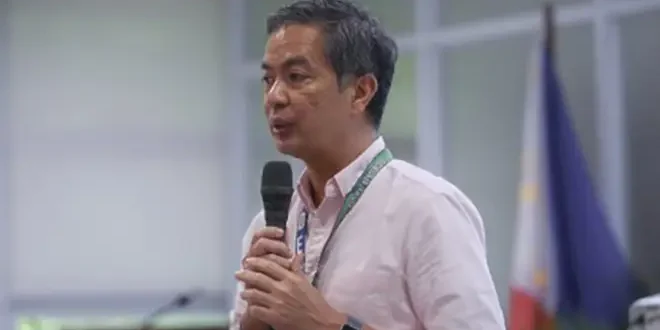
The government is pushing for key reforms aimed at streamlining the mining application process, officials said on Thursday.
Department of Environment and Natural Resources (DENR) Undersecretary for Integrated Sciences, Carlos Primo David, announced during a forum organized by the Chamber of Mines of the Philippines (COMP) that the DENR has introduced a digital application system in three regions.
“We’ve rolled out our digital application process and received initial feedback. Once it’s refined, we will expand this nationwide,” David said during the forum held at The Westin Manila in Ortigas. He added that the system, currently operational in Caraga and Davao, is expected to reduce the mining application process to a maximum of two years. This initiative not only simplifies the procedure but also helps eliminate delays caused by discretionary decisions.
“When evaluating applications, technical and legal aspects often depend on the evaluator, which can cause bottlenecks. This system allows us to track where applications are getting held up,” David explained.
In addition to the digital rollout, the Mines and Geosciences Bureau (MGB) is implementing a parallel processing system for mining permits. This means an application can proceed even without permits from other regulatory bodies, such as local government units (LGUs) and the National Commission on Indigenous Peoples (NCIP). However, David clarified that final permits will only be issued once all necessary requirements are met.
The Anti-Red Tape Authority (ARTA) is also working to streamline the permitting process in the mining sector. ARTA Director General Ernesto Perez shared that they are drafting a model ordinance for LGUs to follow, which will standardize and simplify local-level requirements. “We expect to complete the draft within the year,” Perez said.
David also revealed that the DENR and the Department of Finance are preparing an executive order (EO) to establish a clear policy on mining royalties. The draft EO, expected to be presented to the Office of the President this month, aims to resolve legal ambiguities surrounding mining royalties and clarify the roles of LGUs and indigenous communities.
“For any royalty, you need to set a ceiling. Without one, it could range from 1% to even 100%, which we need to address,” David said.
The government is committed to ensuring the sustainability of the mining industry through reforms. President Ferdinand R. Marcos Jr. has urged lawmakers to fast-track the passage of the Rationalization of the Mining Fiscal Regime bill, which aims to create a fair and equitable mining environment.
COMP Chairman Mike Toledo expressed optimism that the bill will be passed within the year and thanked the President for allowing the organization to offer recommendations on improving the industry during a meeting in August.
Toledo highlighted the importance of long-term policy consistency through a comprehensive mining policy. This would clarify the roles of national and local governments and set guidelines for managing indigenous communities. He also called for simplifying the mineral agreement approval process by reducing steps, eliminating redundancies, and establishing clear timelines in coordination with relevant government agencies.
“We also recommend implementing an online registry for pending applications,” Toledo added.
To mitigate risks posed by conflicting local ordinances, Toledo urged the government to clarify the status of mining companies as government contractors and exporters, and to ensure consistency between national and local laws. He also suggested empowering ARTA to suspend ordinances that contradict the Ease of Doing Business Act and the LGU Citizen’s Charter.
Addressing uncertainties in tax policy and investment incentives, Toledo proposed the creation of a stable and predictable fiscal regime for mining, including a “financial stability clause” in all mineral agreements. This clause would protect the sanctity of contracts and ensure continuity of mining operations, even in the event of adverse changes in government policies.
Finally, Toledo recommended appointing a senior government official dedicated to promoting the mining industry and addressing investment obstacles, further unlocking the sector’s potential.