 The Market Monitor Minding the Nation's Business
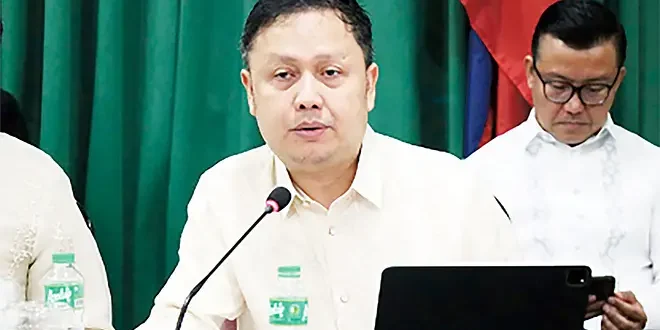
The House of Representatives has finalized its decision to cut the Office of the Vice President’s (OVP) budget by P1.3 billion, reallocating the funds to the Department of Social Welfare and Development (DSWD) and the Department of Health (DOH).
House Appropriations Committee chairperson and Ako Bicol Party-list Rep. Zaldy Co confirmed last week that the small committee handling amendments to the 2025 General Appropriations Bill (GAB) had redirected the P1.3 billion to these two agencies.
Of the reallocated funds, P646.5 million will be added to the DSWD’s Assistance to Individuals in Crisis Situation (AICS) program, while the same amount will go to the DOH’s Medical Assistance for Indigent and Financially Incapacitated Patients (MAIFIP) program.
Earlier, the House had approved reducing the OVP’s 2025 budget from P2.037 billion to P733.198 million. Lawmakers cited overlapping functions between the OVP and other agencies like the DSWD and DOH, which led to duplicated services and unnecessary expenses.
Co emphasized that the budget cut would generate significant savings, particularly in rental costs incurred by the OVP. In 2023, the OVP spent P53 million on leasing 10 satellite offices and two extension offices nationwide—a stark increase from the P4.1 million spent annually on rentals during the term of former Vice President Leni Robredo. These satellite offices, staffed by only a few individuals, have been found to perform tasks already covered by other government agencies, leading to redundancy and higher operational costs.
Co also raised concerns that some of these satellite offices may have been used for political purposes rather than delivering social services.
“By eliminating these overlapping functions, the government can save up to P1.3 billion—representing a significant portion of the OVP’s proposed budget for 2025. This amount can be better utilized by agencies that are equipped to serve the public more effectively,” Co explained.
Although the OVP has reported assisting over 1.5 million beneficiaries through medical, burial, and relief programs as of August 31, 2024, Co stressed that these services could be more efficiently managed by agencies with dedicated resources and expertise.
“Streamlining these responsibilities under the proper departments would not only cut down on the costs of maintaining satellite offices but also improve service delivery, reducing administrative overlap and minimizing confusion for beneficiaries,” he added.
Co also mentioned that the Commission on Audit (COA) has recommended a comprehensive review of the OVP’s functions and expenses to determine whether maintaining these satellite offices is necessary.
“As the government strives for greater fiscal responsibility, reducing redundant spending at the OVP is a key step toward more efficient governance,” Co concluded.