 The Market Monitor Minding the Nation's Business
By Tracy Cabrera
The arrest of former President Rodrigo Roa Duterte (FPRRD) has sparked mixed reactions, but a slight majority of Filipinos agree with Vice President ‘Inday’ Sara Duterte-Carpio, who condemned her father’s arrest as a “blatant affront to our sovereignty.”
According to Duterte’s eldest daughter, “our own government has surrendered a Filipino citizen—even a former President at that—to foreign powers; this is . . . an insult to every Filipino who believes in our nation’s independence.”
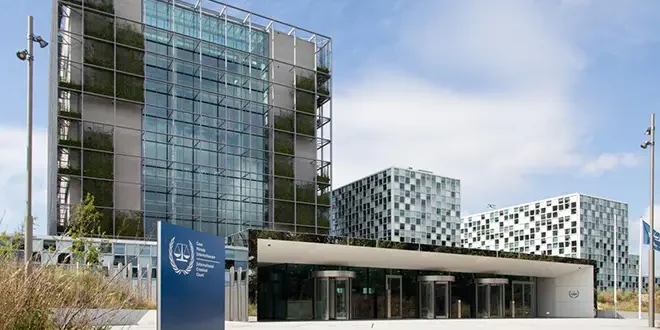
However, do these criticisms against the International Criminal Court (ICC) hold merit? Many believe the ICC undermines national sovereignty, has retroactive jurisdiction, or serves political agendas.
Let’s clarify these misconceptions.
First, the ICC operates under the principle of complementarity, meaning it only investigates crimes if a state is unwilling or unable to do so.
National justice systems retain primary responsibility for prosecuting serious crimes, with the ICC acting only as a last resort when states fail to act in good faith.
Second, the ICC does not have retroactive jurisdiction. Its authority applies only to crimes committed after the Rome Statute—the treaty establishing the court—came into force on July 1, 2002.
This means it cannot prosecute crimes that occurred before this date.
Lastly, claims that the ICC serves political agendas or targets specific countries are unfounded.
The ICC is an independent institution guided by international law, focusing solely on the prosecution of genocide, war crimes, crimes against humanity, and the crime of aggression. Its investigations and prosecutions are based on evidence and legal principles, not political motives.