 The Market Monitor Minding the Nation's Business
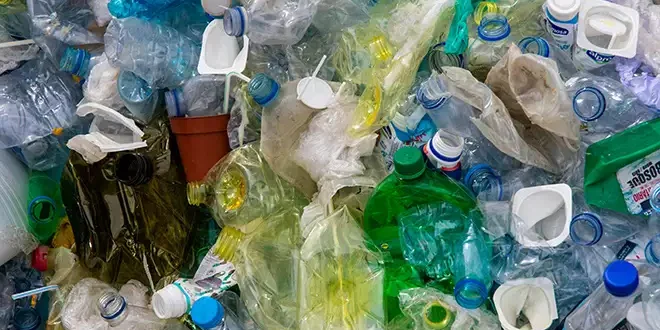
The country urgently needs more infrastructure for segregation, recovery, and recycling to address its escalating plastic waste problem, the Department of Environment and Natural Resources (DENR) said on Thursday.
Speaking during the Environment and Natural Resources (ENR) Day 2025 celebration in Makati City, DENR Secretary Maria Antonia Yulo Loyzaga issued a strong call for united and science-based action against plastic pollution, stressing the Philippines’ critical role in the global fight for environmental protection.
“We need more support, public funds, and the private sector’s technical capacity to cover whole waste management services at the LGU level,” Loyzaga said.
She emphasized that the rising tide of plastic pollution is a serious global environmental issue, with dire consequences for environmental sustainability, social equity, economic development, and public health. Plastics, she added, are not only a waste problem but also a major contributor to climate change, as most are made from fossil fuels and release greenhouse gases when unmanaged.
Citing studies, she warned that plastic-related greenhouse gas emissions could reach 56 gigatons by 2050—equivalent to 10 to 13 percent of the world’s remaining carbon budget.
According to the UN Environment Programme (UNEP), global plastic production has ballooned to around 400 million tons per year and is projected to double by 2040. In the Philippines, daily solid waste production is estimated at 61,000 metric tons, with plastics accounting for 12 to 24 percent of that volume.
“Filipinos use 163 million plastic sachets, 48 million shopping bags, and 45 million thin-film bags daily. One-third of this waste ends up in landfills and dumpsites, while about 35 percent leaks into the open environment and our oceans,” Loyzaga revealed.
She acknowledged the Philippines as one of the world’s top contributors to plastic pollution.
To address this, the DENR is collaborating with multilateral development banks like the Asian Development Bank and NGOs such as Clean Rivers of the UAE’s Zayed Foundation to rehabilitate major waterways including the Pasig River, Laguna de Bay, and Manila Bay.
Loyzaga also pointed to the implementation of the Extended Producer Responsibility (EPR) Law, which mandates companies to collect and recycle 80 percent of their plastic packaging by 2028.
She praised the work of more than 2,300 Estero Rangers and River Warriors who clean plastic waste from waterways in flood-prone areas across Metro Manila and nearby provinces, and called for stronger community-level engagement—including support for microenterprises and waste workers.
“We all know that waste management stems from the home. It reflects the broader social and economic structure that must be addressed through knowledge-driven institutional change,” she said.
“We hope you will join us in this call for swift, bold, and impactful action to combat not just the roots and drivers of plastic pollution. Let’s continue to work together to re-imagine, recreate, and regenerate our only home.”