 The Market Monitor Minding the Nation's Business
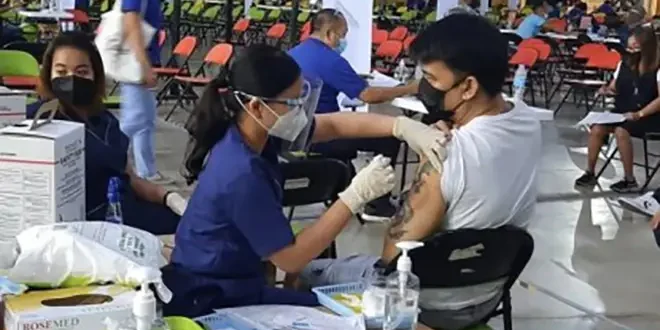
President Ferdinand R. Marcos Jr. has signed Republic Act (RA) 12290 establishing the Virology and Vaccine Institute of the Philippines (VIP), a landmark research hub that will boost the country’s defenses against future pandemics.
The Presidential Communications Office (PCO) said the institute will serve as the national center for research on viruses, pathogens, and vaccine development, enhancing the Philippines’ capacity to respond to public health threats while fostering innovation in science and technology.
“The VIP will be the country’s lead institution for studying disease-causing agents affecting humans, plants, animals, and the environment,” the PCO noted.
The law, signed on Sept. 12, tasks the VIP to conduct vaccine research from discovery to pre-clinical phases, and to develop diagnostics and therapeutics for emerging and reemerging infectious diseases.
First proposed during the Covid-19 pandemic, the VIP Act envisions a state-of-the-art institute with high-containment laboratories, biobanks, genome facilities, and partnerships with global and local research institutions. It will also train experts, provide technical assistance, and issue science-based policy recommendations.
The institute will be supervised by a board co-chaired by the secretaries of Science and Technology, Health, and Agriculture. It will submit an annual report to the President and Congress.
RA 12290 also adopts the “One Health” approach, recognizing the links between human, animal, plant, and environmental health.
The Research Institute for Tropical Medicine (RITM) will retain its functions under the Department of Health, but will work closely with the VIP in disease surveillance and laboratory support.
Findings from the VIP and RITM will feed into the work of the Inter-Agency Task Force on Emerging Infectious Diseases and the National Task Force against animal-borne diseases to strengthen the country’s emergency response.
Malacañang has yet to release a copy of the newly signed law.