 The Market Monitor Minding the Nation's Business

By: Virginia Rodriguez
The holiday season in the Philippines is often described as a time of abundance—tables filled with food, homes warmed by laughter, and communities bound by shared traditions. Yet for many street dwellers and informal settlers, the season can sharpen the pain of scarcity. It is against this backdrop that the government’s Walang Gutom Kitchen program, led by the Department of Social Welfare and Development (DSWD) with the support of President Ferdinand Marcos Jr., takes on deeper meaning.
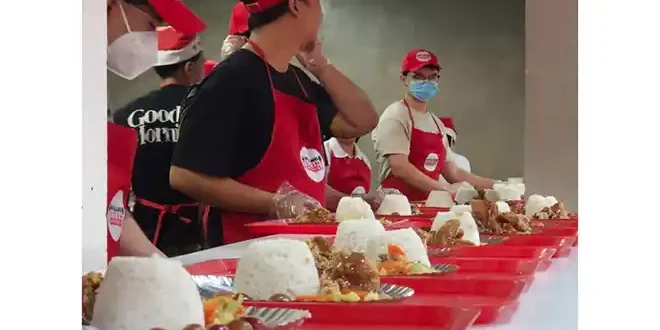
At its core, the Walang Gutom Kitchen program is a response to food insecurity, one of the most persistent social challenges in the country. The initiative provides hot, nutritious meals and essential food items to families and individuals who struggle to meet daily needs. Rather than relying solely on relief packs, the program emphasizes ready-to-eat meals that immediately address hunger, especially among people living on the streets or in informal settlements.
The involvement of the DSWD is significant. As the government’s primary social protection agency, the DSWD has long managed programs targeting the poorest sectors, including conditional cash transfers, supplementary feeding for children, and disaster relief. Walang Gutom Kitchen builds on this institutional experience by focusing on community kitchens that can serve hundreds of beneficiaries in a single day.
President Marcos Jr.’s visible support for the program also underscores a broader policy direction. His administration has repeatedly emphasized food security as a national priority, recognizing that hunger undermines education, health, and productivity. By aligning the Walang Gutom initiative with this agenda, the government signals that feeding the hungry is not merely charitable—it is foundational to development.
During the holiday season, the distribution of food and basic goods carries symbolic weight. For street dwellers and informal settlers, receiving a warm meal can restore a sense of dignity often stripped away by daily hardship. It sends a message that they are seen and valued, even in a society where inequality can make them feel invisible.
Critically, the program does more than provide temporary relief. Community kitchens can become entry points for other forms of assistance, such as health checkups, referrals to shelters, and enrollment in longer-term social programs. In this way, Walang Gutom Kitchen functions as both a safety net and a bridge toward more sustainable support.
There is also a public health dimension worth noting. Nutritious meals help indicate the importance of balanced diets, especially for children and the elderly who are most vulnerable to malnutrition. By prioritizing food quality alongside quantity, the program addresses hunger in a more holistic way.
Skeptics may argue that feeding programs are short-term solutions to deep-rooted poverty. This criticism is not without merit. Hunger is a symptom of structural problems—low wages, lack of secure housing, and limited access to services. However, dismissing feeding initiatives because they are not comprehensive misses the point: people cannot wait for long-term reforms when they are hungry today.
What makes the Walang Gutom Kitchen program particularly relevant is its timing. The holidays often magnify social contrasts, but they also open space for compassion and collective action. Government-led initiatives during this period can set the tone for public empathy and encourage private citizens and organizations to contribute.
Moreover, the program reflects a governance approach that values presence on the ground. When state leaders and agencies personally engage with communities—listening, serving, and responding—they rebuild trust that is often eroded by bureaucracy and distance.
Of course, sustainability remains the key challenge. To truly honor the promise of “walang gutom,” the program must be adequately funded, well-coordinated with local governments, and integrated with livelihood and housing initiatives. Feeding the hungry today should go hand in hand with reducing hunger tomorrow.
In the end, the Walang Gutom Kitchen program is not just about food. It is about reaffirming a social contract, especially during a season defined by generosity. While it cannot solve poverty overnight, it reminds us that governance, at its best, begins with compassion—and that even a simple meal can carry the power to restore hope.