 The Market Monitor Minding the Nation's Business
WITH onion harvest coming by the start of February, Senator Francis “Kiko” Pangilinan, chair of the Committee on Agriculture, Food and Agrarian Reform told the Department of Agriculture (DA) and the Bureau of Customs (BOC) to intensify their operations against onion smuggling, warning that illegal imports could once again undermine local farmers and distort market prices.
Pangilinan stressed that the influx of smuggled onions during harvest periods has historically resulted in depressed farmgate prices, causing significant losses for Filipino onion growers.
He raised concerns about possible hoarding activities and market manipulation. These in turn cause massive price hikes and profits that hurt Filipino consumers.
The anti-smuggling drive is thus crucial to avert a double whammy of injuries: to the farmers and consumers, Pangilinan stressed.
“Now that the onion harvest season is nearing, we must be sure to protect farmers from unequal competition from imported and smuggled onions. Alongside this is the possible hoarding by onion cartels in order to continue manipulating the prices of onions,” he said.
“The illegal entry of agricultural produce at this critical time defeats the purpose of supporting local agricultural production and jeopardizes the livelihood of our farmers,” he added.
The strict monitoring at ports of entry and close coordination among concerned agencies to prevent smuggled agricultural products from entering local markets is indispensable, he said.
The onion harvest season is set to begin in February to May, when illegal importers time their illicit shipments to flood the market, causing prices to crash and hurting local producers.
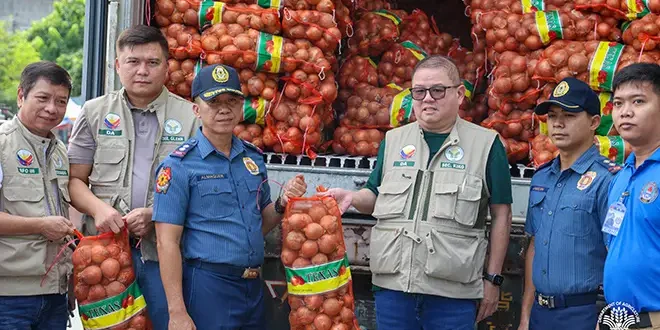
Last May, DA Secretary Francisco Tiu Laurel Jr. led the inspection of two container vans carrying an estimated 34 metric tons of smuggled white onions from China, with a market value of approximately P4.1 million.
The smuggled products tested positive for heavy metals and salmonella in examinations done by the Bureau of Plant Industry’s Plant Products Safety Services Division and the National Plant Quarantine Services Division.
In June, the DA and the BOC also intercepted 25 metric tons of illegally imported red onions from China at the Mindanao International Container Terminal in Misamis Oriental.
Pangilinan urged the DA to monitor supply and demand conditions closely and to avoid issuing unnecessary import permits that could coincide with peak harvest periods.
He appealed to the BOC to intensify inspection and enforcement efforts, particularly against syndicates that exploit seasonal demand to smuggle agricultural goods.
Strengthening border controls and ensuring transparency in importation policies are essential to stabilizing prices for consumers while safeguarding the income of local farmers,” he said, adding that accountability and effective enforcement of anti-smuggling laws benefit farmers, ensure national food security, and protect government revenues.
Pangilinan has been pointing out the roles of big-time Chinese syndicates and their local counterparts in bringing in multimillion-peso smuggled agricultural products.