 The Market Monitor Minding the Nation's Business
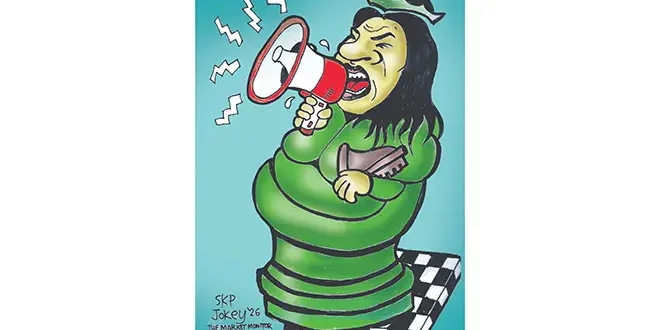
In Philippines politics, timing is never accidental. Seasoned operators understand that early declarations of presidential ambition are rarely about transparency; they are about strategy. A premature announcement can flush out rivals, test alliances, and measure the depth of the political field.
Thus, when Sara Duterte signaled her intentions well ahead of the 2028 race, it was less a spontaneous expression of public service than a calculated move in a shifting chessboard.
Her declaration unfolds against the backdrop of another impeachment complaint winding its way through Congress. Lawmakers, ever attuned to political weather patterns, are likely waiting for signals—funding commitments, coalition assurances, or shifts in public opinion—before deciding how to vote. In such an environment, an early presidential bid can serve as both shield and sword: shield, by rallying loyalists and reframing political attacks as partisan harassment; sword, by pressuring fence-sitters to reveal where they stand before the balance of power tilts.
Whatever public rationale the Vice President offers, it is difficult to ignore the simmering rift between her and Ferdinand Marcos Jr.. The alliance that propelled Marcos to Malacañang in 2022 was widely understood as a marriage of convenience, fusing the Marcos machinery with the Duterte brand. Without the machinery of the Duterte bailiwick—particularly in Mindanao—the Marcos restoration project might have faltered. Yet political marriages forged for expediency often dissolve once power is secured.
Marcos in secret framed his 2022 candidacy as a reclamation of family honor, an effort to rewrite the narrative that has long haunted the Marcos name. Critics argue that governance since then has exposed a thinness of vision, more attuned to optics than structural reform.
If that perception hardens among voters—especially the digitally savvy youth who will form a decisive bloc in 2028—the parallel with a prospective Sara Duterte presidency becomes striking. Would it be a program for national uplift, or another chapter in dynastic vindication?
Philippine campaigns, after all, are no strangers to mythmaking. Vast resources will be poured into social media ecosystems, crafting polished narratives and drowning out less flattering accounts—be they questions about confidential funds or other allegations of misuse. The battle will not merely be fought in town plazas but in algorithm-driven feeds, where repetition can transmute spin into perceived truth.
An additional variable looms large: the fate of former President Rodrigo Duterte, whose legal troubles before the International Criminal Court continue to reverberate. Should his prolonged trial take a tragic turn before 2028, sympathy could crystallize into political capital for his daughter, particularly across Mindanao, where his populist brand retains deep emotional resonance. In Philippine politics, martyrdom—real or constructed—can be a potent accelerant.
Ultimately, 2028 will test whether Filipino voters, especially the young, can see beyond dynastic narratives and digital gloss. Early declarations, impeachment dramas, and international court proceedings are but pieces of a larger puzzle. The more urgent question is whether the electorate will demand governance rooted not in redemption arcs for powerful families, but in tangible improvements to everyday life.