 The Market Monitor Minding the Nation's Business
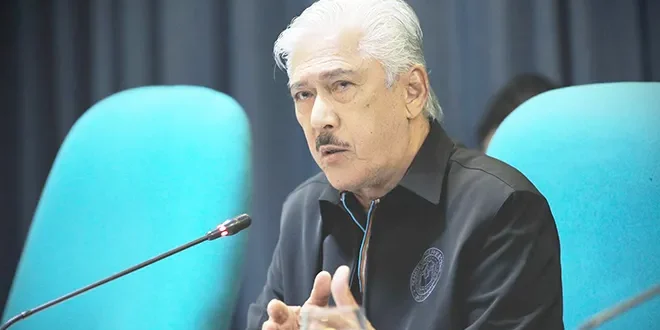
Senate President Vicente “Tito” Sotto III is urging the establishment of a national strategic petroleum reserve to safeguard the country’s energy security amid rising global tensions in the Middle East.
Speaking during a media forum in Malate, Sotto warned that recent attacks and escalating hostilities in the region have disrupted key oil routes, straits, and refineries—developments that could soon push petroleum prices higher and affect the Philippine economy.
To address the looming risks, Sotto said he has filed Senate Bill No. 1934, also known as the Philippine Strategic Petroleum Reserve Act, which proposes the creation of a government-owned petroleum stockpile.
“This why I have filed Senate Bill No. 1934, also to be known as the Philippine Strategic Petroleum Reserve Act, in order to establish a strategic petroleum reserve owned and managed by the national government through the Department of Energy (DoE) and mandated to maintain petroleum stocks equivalent to at least 90 days of the country’s average national consumption,” Sotto said.
He pointed out that the Philippines currently lacks a comprehensive, state-managed petroleum reserve that could cushion the country during prolonged supply disruptions.
“At present, the country does not maintain a comprehensive, state-managed strategic petroleum reserve capable of cushioning prolonged supply interruptions,” the Senate President added.
In the explanatory note of the proposed measure, Sotto stressed that the Philippines remains heavily dependent on imported petroleum products to sustain critical sectors such as transportation, agriculture, manufacturing, power generation, logistics, and essential public services.
“This structural dependence exposes the country to external supply shocks arising from geopolitical conflicts, regional instability, maritime disruptions, sanctions regimes, climate-related disasters, and speculative volatility in global oil markets,” he noted.
Under the bill, storage facilities for crude oil and refined petroleum products—including diesel, gasoline, jet fuel, liquefied petroleum gas, and other critical energy resources—will be established across the country under the supervision of the Department of Energy.
The measure also outlines the conditions for releasing fuel reserves. According to Sotto, the emergency release of petroleum products would require authorization from the President upon the recommendation of the Strategic Energy Security Council in situations such as severe supply disruptions, a declared national emergency, extraordinary price volatility, or major natural disasters.
In closing, Sotto emphasized the need for long-term preparedness to shield the country from global energy shocks.
He said such preparedness is not optional but a responsibility that can be fulfilled through “the establishment of a law that secures a forward-looking investment in national stability, economic continuity and sovereign resilience.”