 The Market Monitor Minding the Nation's Business

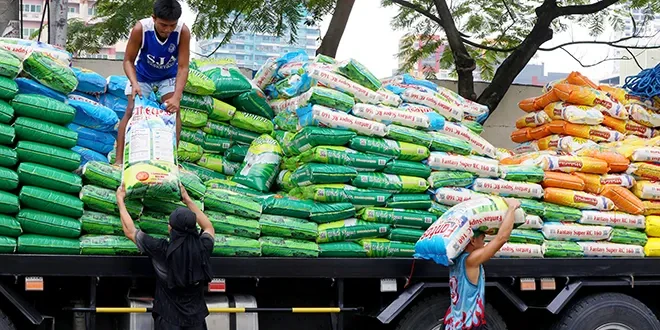
The Department of Agriculture (DA) assured last week that it is maintaining a “careful balance” between protecting Filipino consumers from rising rice prices and safeguarding the livelihood of local farmers despite a surge in rice imports during the first half of the year.
At a press briefing, Agriculture Assistant Secretary Arnel de Mesa said the increase in imported rice arrivals is a response to supply risks posed by the looming El Niño, higher global oil and fertilizer prices, reduced irrigated rice areas, and the need to keep rice affordable through the end of the year.
“We need enough supply that is affordable while ensuring stable rice volumes until the end of the year,” De Mesa said, adding that the government is carefully managing imports to prevent price spikes.
Data from the Bureau of Plant Industry showed that rice imports reached 2.75 million metric tons (MT) from January to June, up 20.1 percent, or about 470,000 MT, from 2.29 million MT during the same period last year.
De Mesa said importers have also taken advantage of lower international rice prices ahead of the expected impact of El Niño and the wet harvest season.
He noted that cheaper imports have helped support the government’s PHP50-per-kilogram price cap on premium imported rice, with retailers earning what he described as a reasonable margin.
The DA has proposed extending the price cap for another 60 days, a recommendation already adopted by the National Price Coordinating Council and now awaiting approval from the Office of the President.
Despite the higher import volume, De Mesa assured that the DA is preparing measures to protect local farmers as the harvest season begins in September.
He said the agency wants to avoid a repeat of last year’s situation when excessive imported rice contributed to farmgate prices of palay dropping to as low as PHP8 per kilogram in some areas.
Among the measures being prepared is the National Food Authority’s (NFA) continued purchase of locally produced palay at higher farmgate prices under its flexible pricing scheme.
The DA is also reviewing whether to reimpose restrictions on rice imports during the harvest season, similar to the temporary import ban implemented in the final quarter of last year.
De Mesa said the government still has time to assess the need for additional safeguards, noting that most rice crops are still in the early vegetative stage.
He added that the DA is also studying tighter controls on imported rice, including limiting the entry of 5-percent broken rice and allowing only 25-percent broken rice imports, in line with discussions with industry stakeholders.
Agriculture Secretary Francisco Tiu Laurel Jr. had earlier announced an agreement in principle to temporarily halt imports of 5-percent broken rice beginning this month as part of efforts to support local rice producers during the upcoming harvest.