 The Market Monitor Minding the Nation's Business

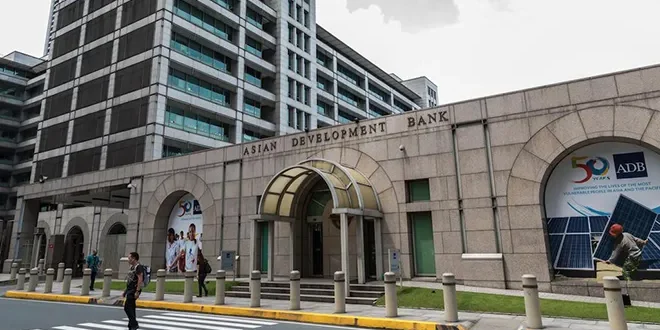
The Asian Development Bank (ADB) downgraded its Philippine economic growth forecast to 3.8 percent this year.
In its Asian Development Outlook (ADO) report for July 2026 published last Wednesday night, July 8, the Manila-based multilateral lender sharply cut its 2026 gross domestic product (GDP) growth projection for its host country from 4.4 percent previously.
The latest forecast is within the government’s downgraded GDP growth target range of 3.5 to 4.5 percent for this year, but below the 4.5-percent average expansion projected for the Association of Southeast Asian Nations (ASEAN).
“Among major economies in the subregion, the Philippines saw a downward adjustment in growth projections due to delayed investments, softer private consumption amid higher commodity prices, and climate-related risks,” the ADB said.
The lender also trimmed its Philippine GDP growth forecast for 2027 to 5.3 percent from 5.5 percent previously, still within the government’s five- to six-percent target for next year.
The downgrade followed a marked slowdown in the Philippine economy, which grew by just 2.8 percent in the first quarter as the country continued to deal with the lingering impact of the multibillion-peso flood-control infrastructure corruption scandal.
It can be recalled that the ADB had tightened oversight of its Philippine projects in the aftermath of the flood-control controversy following “grave corruption concerns.”
The ADB specifically pointed to weak government spending on infrastructure as an investment drag during the first quarter, as construction also contracted for a third straight quarter.
According to the ADB, investment strengthened across much of developing Asia-Pacific on capital spending related to artificial intelligence (AI), but weakened in the Philippines due to low public infrastructure spending.
The ADB said its 2026 growth forecast for developing Southeast Asia was trimmed following downward revisions for the Philippines and Cambodia as higher global energy prices caused by the ongoing war in the Middle East weigh on domestic demand and tourism.
Meanwhile, the ADB raised its Philippine inflation forecast for 2026 to 5.9 percent from four percent previously—the biggest upward revision among developing Southeast Asian economies.
The 1.9-percentage-point (ppt) increase in the Philippine forecast was followed by Cambodia’s 1.7-ppt upward revision to 4.5 percent, and Thailand’s 1.6-ppt increase to 2.9 percent.
The ADB’s 2026 inflation forecast for the Philippines is slightly below the government’s revised six- to seven-percent target range for this year. Headline inflation averaged 4.8 percent in the first half of 2026.