 The Market Monitor Minding the Nation's Business

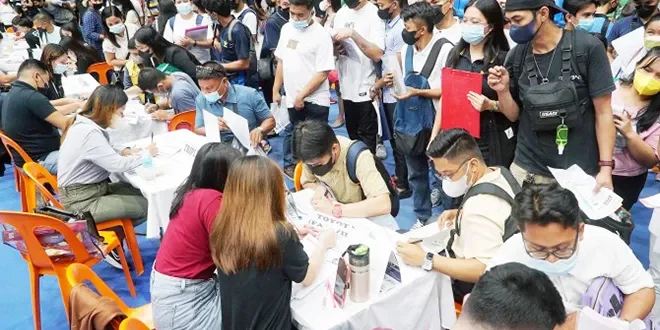
The Philippines’ unemployment rate shot up again in May, 2026, negating whatever measures the government under President Ferdinand Marcos Jr. has been doing to remedy the labor problem. The government just can’t generate enough jobs for every worker willing to work.
Latest data from the Philippine Statistics Authority (PSA) showed that the number of unemployed Filipinos rose to 2.5 million in May from 2.41 million in April.
This translated to an unemployment rate of 4.8 percent, slightly higher than April’s 4.7 percent. On a year-on-year basis, the figure was also higher than the 3.9 percent recorded in May last year.
As a result, the average unemployment rate in the first five months of the year climbed to 5.1 percent, well above the 4 percent recorded in the same period last year.
Despite the increase in unemployment, other labor market indicators improved on a month-on-month basis.
The number of employed Filipinos rose to 49.63 million in May from 48.9 million in April. However, the employment rate slipped slightly to 95.2 percent from 95.3 percent.
The labor force likewise expanded to 52.13 million, equivalent to a participation rate of 63.8 percent, from 51.3 million or 62.7 percent in the previous month.
Meanwhile, underemployment—or the number of employed Filipinos seeking additional work or longer working hours to boost their income—declined to 6.04 million, equivalent to 12.2 percent of employed workers, from 7.41 million or 15.2 percent in April.
It was cited that the seemingly conflicting labor market indicators reflected the rapid expansion of the labor force.
An analyst said when the labor force participation rate rises, more people enter the active labor pool, and even if employment also rises in absolute terms, the newly active entrants who have not yet found work register as unemployed, pushing the rate up simultaneously with improving employment and underemployment numbers.
Another observation is that the labor market could face fresh headwinds even as it continues to navigate lingering uncertainties stemming from the war in the Middle East.