 The Market Monitor Minding the Nation's Business

By Robert Andaya
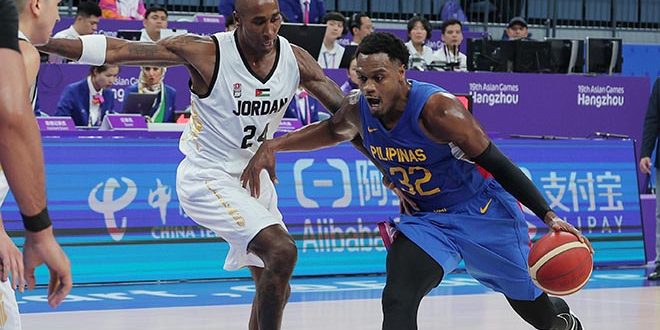
DESPITE the recent doping issue against naturalized player Justin Brownlee, the Philippines’ men’s basketball gold medal in the 19th Asian Games in Hangzhou, China is safe and secured.
The assurance was made by no less than Philippine Olympic Committee (POC) president Abraham “Bambol” Tolentino following reports that Brownlee, the hero in the Philippines’ successful campaign in basketball in Hangzhou, has failed an anti-doping test conducted by the International Testing Agency (ITA),
ITA, which was mandated by the Olympic Council of Asia to independently handle areas of the anti-doping program at the Asian Games, reported that “a sample collected from basketball player Justin Brownlee from the Philippines has returned an Adverse Analytical Finding for Carboxy-THC, a specified Prohibited Substance, according to the Prohibited List of the World Anti-Doping Agency.”
The finding was reportedly made last October 7, or a day after Brownlee led Gilas Pilipinas to an inspiring 70-60 victory over Jordan and the country’s first-ever Asiad basketball gold medal in more than six decades.
The matter will now be referred to the Anti-Doping Division of the Court of Arbitration for Sport (CASS ADD) for adjudication under the OCA Anti-Doping Rules.
But Tolentino clarified that the country’s gold medal in basketball would not be affected by Brownlee’s case.
Tolentino cited Article 11.2 of the Anti-Doping Rule of the International Olympic Committee (IOC) under “Consequences for Team Sports” stating that “If more than two members of a team in a Team Sport is found to have committed an anti-doping rule violation … the CAS (Court of Arbitration for Sport) Anti-Doping Division may impose an appropriate sanction on the team (e.g., loss of points, Disqualification from a Competition, Event or the Olympic Games Rio 2016, or other sanction) as provided in the applicable rules of the relevant International Federation, in addition to any consequences imposed upon the individual Athletes committing the anti doping rule violation.”
The Tagaytay City Mayor Tolentino also explained that the only time the gold medal game will be forfeited is in case two more Gilas Pilipinas players also test positive. The article further adds that the sample was collected by the ITA on Oct. 7, a day after Gilas beat Jordan for the gold medal, and that Brownlee had already been informed of the finding. Brownlee, who is currently in the United States, has the right to request for an analysis of his B-sample.
Tolentino also said he had already discussed the matter with the Samahang Basketbol ng Pilipinas (SBP), which explained that Brownlee had been on medication to manage his nagging injuries.
The SBP officials claimed that what likely caused the adverse finding, according to Tolentino.
Brownlee, who is now provisionally suspended, has until Oct. 19 to contest the result through appropriate procedures set by the IOC ITA and World Anti-Doping Agency.
“All Brownlee needs is to prove his innocence in contesting the result if he allows testing his B sample,” said Tolentino.
“But if the B sample also yields a positive result, Brownlee will be suspended from international competition for two years.”
The popular Barangay Ginebra import is also facing suspension from the PBA similar to what happened to Kiefer Ravena, who was suspended for 18 months after testing positive for a banned performance-enhancing substance in 2018
Brownlee is actually the second Filipino athlete during the Hangzhou competition who tested positive for illegal substances.
Cyclist Ariana Patrice Evangelista tested positive for erythropoietin.
Although Evangelista has already denied taking the substance —a performance enhancing drugs —she has been already provisionally suspended.
The same ITA report said eight other athletes,including basketball player Sami Bzai, returned adverse findings.