 The Market Monitor Minding the Nation's Business
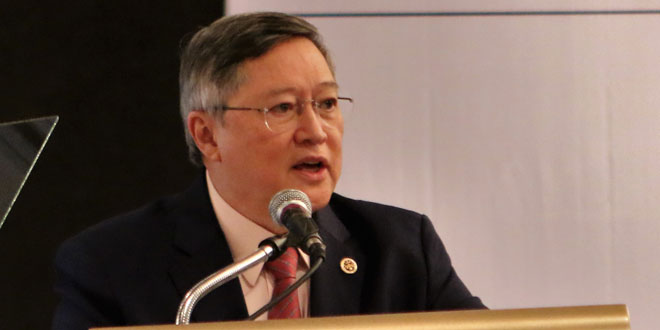
The comprehensive tax reform program (CTRP) bill now pending in Congress is the “key link” to the “grand effort” to break out from the cycle of low growth and deliver a dynamic and truly inclusive economy to Filipinos, Finance Secretary Carlos Dominguez said.
Dominguez said the Duterte administration’s plan to accelerate spending on infrastructure and on human capital by upgrading the country’s educational and health care systems, along with its goal to lower income tax rates to sharpen the Philippines’ global competitiveness, would require additional revenue measures that could only be generated via the CTRP.
“The CTRP is an indispensable component of the Duterte administration’s economic strategy. It is an audacious strategy that seeks to lift our country to upper middle-income status by 2022 and high-income status by 2040,” Dominguez said.
Dominguez said now is the time to move decisively in carrying out this “grand effort,” given the convergence of positive factors that are conducive to high and inclusive growth, such as the economy’s low-interest rate regime, excess liquidity, benign oil prices, investment-grade credit rating, a young, vigorous work force and the strong support of countries like Japan and China.
“We do not intend to fail in meeting the challenges of this time,” Dominguez said. “Fortunately, we have a leader capable of much audacity. We have a leader of vision and intense love of country. All the favorable factors are present. It is time now for a breakout,” he added.
He said the Duterte administration’s 10-point socioeconomic reform agenda takes into account these positive factors but the economic opportunities arising from them will bear real fruit “only if they are undertaken by audacious policymaking.”
This reform agenda, Dominguez said, includes an infrastructure buildup that will entail trillions of pesos in investments that are necessary to help ensure that the next generation of Filipinos do not remain “in the same poverty trap we found ourselves in.”
“Realigning income tax rates, however, will bring down revenues even as we improve tax administration and broaden the tax base. This means we have to introduce new revenue measures that will not only compensate for lower tax rates but also fund the massive infra program that commences now,” he added.
“The CTRP, therefore, is the key link in the grand effort to break out from the cycle of low growth and build a dynamic and inclusive economy for our people,” Dominguez said. “It is a pro-active and pro-poor measure that supports the expansionary fiscal posture of the present administration,” he said.
Dominguez pointed out that after being saddled by a debt burden and the Asian financial crisis for many years, the country is currently enjoying a “Cinderella moment” when it is now highly capable of shifting the source of growth to an “investment-led” one that creates jobs and opens more economic opportunities for Filipinos.
“We have completed our fiscal consolidation, which was started under the presidency of Gloria Arroyo.Our credit ratings attest to that,” he said.
Dominguez added the debt burden is no longer a drag on the country’s economic growth.
“We can now reshape our economic development so that it is investment-led. This, in turn, will open the door to a truly inclusive economy. An investment-led growth pattern creates jobs and opens more economic opportunities for our people,” he said.
The Philippines, he said, is also looking forward “to what has been called a ‘demographic sweet spot.’
As the populations of some of the more mature economies in Asia begin to age, we are looking forward to the entry of millions of young Filipinos into the workforce, he said. “We must invest in them and make them globally competitive. We must prepare the economy to provide meaningful jobs for them or else risk building an alienated and discontented generation,” he added.
Describing this “demographic sweet spot” as both a “challenge and an opportunity,” Dominguez said this advantage “is a test of our ability to govern and chart the nation’s future” and requires “reshaping our country’s economic development beginning at this time.”